

 English
 русский
 Français
 Español
 عربى
عربىCan MDF PVC Doors Work Across Bedrooms, Kitchens and Bathrooms
Choosing doors for a whole house sounds simple until different rooms start bringing different conditions into the picture. A bedroom may stay fairly dry, while a kitchen deals with cooking steam and regular cleaning. A bathroom has its own concerns because moisture is part of everyday use.
This is where MDF PVC Doors often come into the discussion. They can offer a consistent look across several rooms, but that does not mean every doorway should be treated in exactly the same way. Room conditions, door position, ventilation, surface care, and installation all deserve a look before the order is finalized.
For homeowners, interior designers, contractors, and project buyers, the useful question is not simply whether an MDF PVC door can be used in a particular room. It is whether the selected door and its installation conditions make sense for the way that room is actually used.
Can the Same Door Style Work in Different Rooms?
There is a good reason many homeowners prefer a related door style throughout the house. Walking from one room to another feels more connected when the doors share similar colors, finishes, or panel designs.
The rooms themselves, however, are not identical. A bedroom usually has limited exposure to moisture. A kitchen can see steam, grease, and frequent wiping. A bathroom may have condensation and occasional splashing around the doorway.
So using the same visual style does not necessarily mean making the same decision for every opening. The appearance can remain consistent while the installation and application are considered room by room.
| Room | Main Points to Review |
|---|---|
| Bedroom | Privacy, appearance, furniture layout, everyday operation |
| Kitchen | Cleaning, steam, moisture, door position |
| Bathroom | Humidity, ventilation, splashing, exposed edges |
| Living area | Interior style, circulation, opening direction |
That small distinction can make a project much easier to plan. The door design can follow one overall direction without pretending that every room has the same environment.
Why Does an MDF PVC Door Make Sense for a Bedroom?
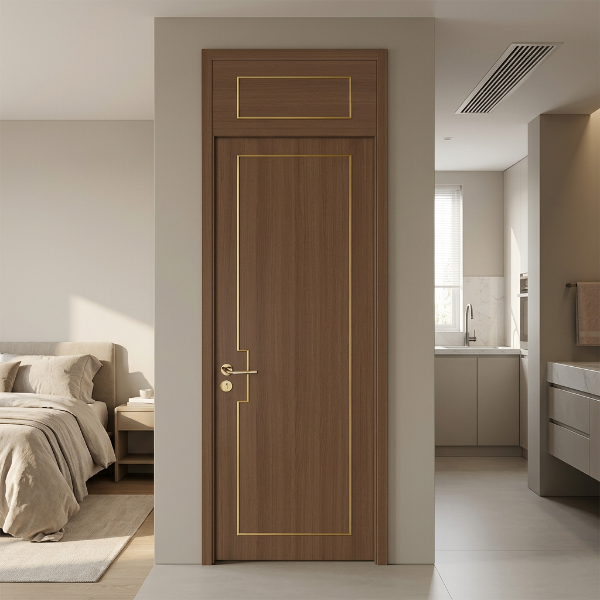
Bedrooms are generally easier to plan because they do not normally have direct contact with water. Buyers can put more attention on privacy, appearance, room layout, and how the door fits with the rest of the interior.
An MDF PVC door can work well with different bedroom styles because the surface finish becomes part of the room design. A wood-inspired appearance can sit comfortably with timber flooring and warm furniture, while a simpler finish may suit a cleaner contemporary interior.
The door opening itself is worth checking before making the final choice. A wardrobe placed close to the doorway, for example, can affect how the door swings. The same applies to desks, beds, cabinets, and narrow passages.
For a house with several bedrooms, using a related door design can also create a more consistent appearance from the hallway. Individual rooms can still have their own furniture and decoration without making the doors feel disconnected from one another.
What Should You Think About When Using One in a Kitchen?
The kitchen changes the conversation a little. Cooking naturally produces steam, and surfaces around the room may need to be wiped more often than those in a bedroom.
The location of the doorway matters here. A door beside a sink faces a different situation from one that separates the kitchen from a hallway several steps away. Cabinets, appliances, counters, and other fixed items can also affect the available space around the opening.
Cleaning is another practical point. Before ordering, buyers should understand how the selected surface is intended to be c
leaned and what type of everyday care is recommended. A finish that looks attractive in a sample still needs to suit the way the kitchen will actually be used.
A Few Kitchen Questions Worth Checking
- Where is the doorway in relation to the sink and cooking area?
- Will the door be exposed to regular steam?
- How often is the surface likely to be cleaned?
- Does the selected finish fit the planned cleaning routine?
- Will cabinets or appliances affect the door swing?
- Are the edges and installation areas properly considered?
None of these questions is difficult. They simply help buyers look at the door from the point of view of everyday kitchen use rather than choosing it from appearance alone.
Can MDF PVC Doors Be Used in Bathrooms?
Bathrooms need a closer review because humidity and steam are part of normal use. The amount of exposure can vary considerably from one bathroom to another, though.
A doorway positioned away from the shower area may have a different environment from one located directly beside a wet zone. Ventilation also changes how quickly moisture leaves the room.
For this reason, the suitability of an MDF PVC door should be considered together with its actual construction and the conditions of the installation. The PVC surface is visible, but it is not the only part of the door that matters. Edges, joints, hardware areas, the lower section, and surrounding surfaces all deserve attention.
Where Should Buyers Pay Attention?
Start by looking at the bathroom layout. Identify where water is used, where steam tends to collect, and how the room is ventilated.
- Consider the distance from showers and other wet areas.
- Check whether the room has suitable ventilation.
- Review exposed edges and the lower part of the door.
- Confirm the intended application with the manufacturer.
- Discuss installation conditions before production.
A bathroom does not automatically become an unsuitable location simply because it is humid. The actual environment and the selected door construction need to be considered together.
Does the Door Finish Change From Room to Room?
It can, but it does not have to.
Some projects use one finish throughout the property because the owner wants a continuous visual style. Others use different finishes to give bedrooms, kitchens, and other spaces their own character.
MDF PVC door finishes can be selected around the wider interior. Color, surface pattern, furniture, flooring, and wall treatment all contribute to how the finished room looks.
| Application | Finish Consideration |
|---|---|
| Bedroom | Coordinate with furniture and bedroom decoration |
| Kitchen | Consider cleaning and surrounding surfaces |
| Bathroom | Consider humidity and installation conditions |
| Living area | Connect with the overall interior style |
A consistent finish can make a property feel more unified. A carefully chosen variation can also work when different rooms have different design goals. Neither approach needs to be treated as a rule for every project.
Can One Interior Design Run Through the Whole Home?
Yes, and doors can play a useful part in making that happen.
Think about a hallway with several bedroom doors, followed by a kitchen and a bathroom nearby. If the doors share a related color or surface treatment, the interior can feel connected even though the rooms serve completely different purposes.
That does not require every door to be identical in every detail. A bathroom opening may need different installation considerations from a bedroom opening. The visual language can remain similar while the practical side is handled according to the location.
This is particularly useful for apartments and new residential projects where several units are expected to follow a common interior concept. Buyers can establish a general design direction and then review individual openings according to their surroundings.
What Should Buyers Confirm Before Placing a Door Order?
For one home, it is possible to make decisions gradually. Larger projects usually need more organization because many doors may enter production at the same time.
A room-by-room list can help. It gives the manufacturer a clearer picture of what is needed instead of leaving the application open to interpretation.
| Information to Confirm | Why It Matters |
|---|---|
| Room type | Identifies the intended application |
| Door design | Keeps the planned appearance clear |
| Surface finish | Helps coordinate with the interior |
| Opening direction | Allows the surrounding layout to be checked |
| Installation environment | Gives the manufacturer useful application information |
| Quantity by room | Helps organize production and delivery |
| Customization needs | Allows special requirements to be discussed early |
This information may look basic, but it becomes valuable when a project contains many openings. It also gives both the buyer and manufacturer something concrete to refer back to if a question comes up later.
Why Is Installation Important for Different Rooms?
The door itself is only one part of the finished installation. The frame, wall opening, surrounding surfaces, hardware, clearance, and exposed edges all become part of the final result.
In a bedroom, the main concern may be whether the door opens comfortably around furniture. In a kitchen, cabinets or appliances can create a similar issue. In a bathroom, moisture around the opening deserves additional attention.
That is why installation should be discussed before the doors arrive on site. Small details are easier to handle when they are identified during planning rather than after the product has already been delivered.
For manufacturers and project buyers, a clear installation environment is useful information. It helps connect the product being ordered with the actual opening where it will eventually be installed.
How Does Everyday Cleaning Differ Between Rooms?
Not every interior door gets the same level of daily attention.
A bedroom door may only need routine dusting and occasional surface cleaning. Kitchen doors can pick up fingerprints, cooking residue, and other marks more regularly. Bathroom doors may encounter condensation and moisture around the room.
The selected finish should therefore be considered alongside the cleaning routine. Buyers should follow the manufacturer's care recommendations instead of assuming that every surface can be cleaned in exactly the same way.
There is also a wider room issue. If a bathroom stays damp for long periods, ventilation and moisture management become important for the room as a whole. The door should not be expected to solve an environmental problem by itself.
What Makes Room-by-Room Planning Useful for Larger Projects?
A residential development may contain many apartments, and each apartment may contain several bedrooms, kitchens, bathrooms, and living areas. When the number of doors increases, keeping track of where each product belongs becomes part of the purchasing process.
Grouping the requirements by room can make the information easier to follow. A project team might separate bedroom doors from bathroom doors, then organize them according to unit type or floor.
The same structure can help when discussing finishes and customization. Instead of describing every door individually, the buyer can explain which requirements are shared and which ones are different.
| Project Area | Useful Information |
|---|---|
| Bedrooms | Quantity, design, finish, opening direction |
| Kitchens | Location, cleaning needs, surrounding layout |
| Bathrooms | Moisture exposure, ventilation, installation conditions |
| Shared areas | Traffic, appearance, circulation |
It is a simple way to keep the purchasing conversation tied to the actual building instead of treating every door as a separate item.
What Information Helps a Door Manufacturer Understand the Project?
A product name and quantity are useful starting points, but they do not always tell the whole story.
Manufacturers can understand a project more clearly when buyers explain where the doors will go and how the rooms will be used. A basic floor plan, room schedule, finish preference, opening information, and notes about unusual conditions can all make the discussion easier.
For a project containing bedrooms, kitchens, and bathrooms, it is worth pointing out which openings have different environmental conditions. This is especially helpful when the same general door style is planned throughout the property.
Customization can also be discussed at this stage. If several rooms need a coordinated appearance but have different requirements, those differences can be organized before production begins.
For a supplier, the goal is to understand the complete requirement rather than guess how the product will be used after delivery.
Are MDF PVC Doors a Practical Choice for Mixed-Room Projects?
They can be considered when a project needs a coordinated interior appearance across several rooms, provided the selected product and installation conditions suit each application.
The bedroom is generally a relatively straightforward environment. The kitchen calls for more attention to steam, cleaning, and the location of the opening. The bathroom needs closer consideration of humidity, ventilation, splashing, and exposed areas.
That difference is important. It prevents the common mistake of assuming that one product decision automatically answers every room-related question.
At the same time, there is no need to give up a consistent interior style simply because the rooms have different conditions. A shared door design, finish, or color can still connect the property visually while the practical details are reviewed for each opening.
A Simple Checklist Before You Make the Final Choice
Before ordering MDF PVC doors for several rooms, take a quick look at the following points:
- Where will each door be installed?
- Will the door encounter regular steam or moisture?
- How close is the opening to a sink, shower, or other water source?
- Is the room properly ventilated?
- Does the selected finish fit the interior design?
- Will furniture, cabinets, or appliances affect the opening?
- What installation details should be confirmed with the manufacturer?
- Which rooms require different specifications or customization?
- What cleaning and care method is recommended for the selected finish?
These checks do not need to turn door selection into a complicated process. They simply bring the actual room into the conversation before the product is ordered.
For a home with several different spaces, MDF PVC doors can provide a way to keep the interior visually connected. The important part is matching the product and installation plan to the conditions of each room, rather than assuming that bedrooms, kitchens, and bathrooms all have the same requirements.
Interested in cooperation or have questions?


 +86-13857003056
 No. 27 Lianhuashan Avenue, Jiangshan Economic Development, Jiangshan, Quzhou, Zhejiang, China
Copyright © Zhejiang Kings Home Decor Co., Ltd. All Rights Reserved.

Interior Wood Door Manufacturer