

 English
 русский
 Français
 Español
 عربى
عربىCustom MDF Doors vs RTF Doors: Which One Fits Your Project?
Choosing cabinet doors sounds simple until you actually compare the options side by side and realize how different the outcomes can be. Kitchen designers, cabinet makers, and procurement teams all run into the same crossroads: go with Custom MDF Doors for design flexibility, or lean toward RTF doors for their molded finish and moisture resistance. Both materials start from a similar base, yet the way they are finished changes almost everything about how they perform over time.
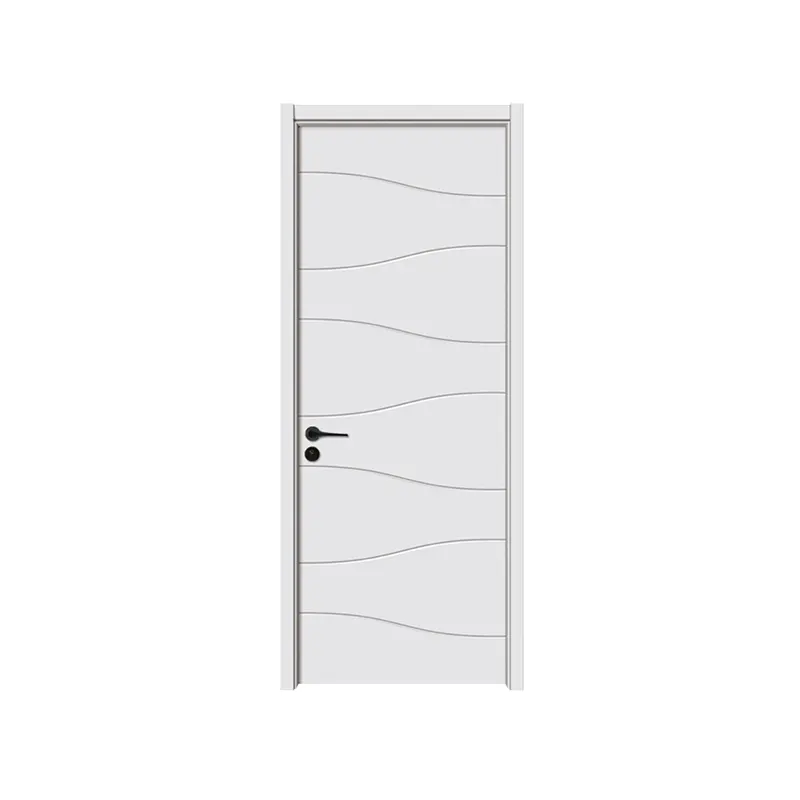
What Are We Actually Comparing Here?
Before getting into performance differences, it helps to understand what each door type actually is, since the names alone do not tell the full story.
MDF Doors Start With a Flat Fiberboard Core
Medium-density fiberboard forms the base for both product types. MDF is a dense, uniform panel that machines cleanly and supports detailed routing, making it a widely used substrate for cabinet doors.
Custom versions take that raw panel and shape it according to a project's specific design, then finish it with paint, laminate, or a PVC wrap depending on the intended look and budget.
RTF Doors Use a Molded Thermofoil Layer
RTF stands for rigid thermofoil. The process starts with the same MDF core, but instead of applying paint or a flat laminate sheet, manufacturers press a vinyl film over the shaped panel using heat and vacuum pressure. This lets the film follow every groove and profile carved into the door face.
That molding process is what gives RTF doors their distinctive smooth, seamless surface, since the film wraps continuously over routed details rather than being applied as separate flat pieces.
Does Design Flexibility Actually Differ Between the Two?
Yes, and this is often where the comparison becomes important for buyers with specific aesthetic goals.
Custom MDF Doors offer a wider range of design possibilities because the finishing method is not locked into a single process. A cabinet maker can paint the panel in nearly any color, apply a PVC MDF door wrap for a wood-look finish, or laminate it with a textured surface depending on what the project calls for.
RTF doors, by contrast, are somewhat limited by the thermoforming process itself. The vinyl film needs to stretch evenly over the routed profile, which restricts how deep or complex the carved details can get before the film risks tearing or thinning unevenly at sharp corners.
Which Approach Wins for Detailed Millwork?
For projects involving intricate raised panel designs or deep decorative routing, custom fabrication tends to hold up better because the finish is applied with more control over each section. RTF works well for moderate profile depths but starts showing strain on more aggressive designs.
How Do MDF PVC Doors Compare on Surface Durability?
Surface performance is where a lot of buyers focus their attention, since doors get touched, wiped, and occasionally bumped on a daily basis.
MDF PVC doors apply a vinyl film directly onto a flat or lightly profiled surface, bonded under heat, similar in concept to RTF but often applied with slightly different pressure and adhesion methods depending on the manufacturer. This creates a surface that resists moisture penetration reasonably well, since the film acts as a barrier over the fiberboard core.
RTF doors share a similar moisture-resistant quality because of the continuous film layer, though the seams around edges and cutouts can become a weak point over time if the film begins to lift.
A few practical durability factors worth checking before committing to either option:
- How well the edges are sealed where the film wraps around the door perimeter
- Whether the film shows any bubbling or lifting under sample heat exposure testing
- How the surface responds to repeated cleaning with common household cleaners
- Whether the color remains consistent after extended exposure to sunlight near windows
MDF Door Vs Solid Core: Does Core Material Change the Outcome?
This comparison comes up frequently among buyers weighing long-term durability against upfront cost, and it is worth addressing directly.
Solid core doors use a denser, often multi-layered wood or composite structure throughout the entire panel, giving them somewhat better resistance to warping under humidity swings. MDF doors, while dense and stable under normal conditions, can be more sensitive to prolonged moisture exposure if the surface film or coating ever gets compromised.
That said, for many kitchen and cabinetry applications, a properly sealed MDF door performs well under normal household conditions. Solid core options tend to get chosen more often for high-humidity commercial environments or projects where long-term structural rigidity matters more than surface customization.
Comparing the Two Options at a Glance
Buyers often find it easier to compare these materials once the differences are laid out side by side rather than scattered across separate sections.
| Feature | Custom MDF Doors | RTF Doors |
|---|---|---|
| Design Flexibility | Wide range of colors, wraps, and profile depths | Limited by film stretch over routed details |
| Surface Finish | Painted, laminated, or PVC wrapped depending on project | Continuous molded vinyl film |
| Moisture Resistance | Good when properly sealed and finished | Good due to continuous film coverage |
| Edge Durability | Depends on finishing method used at edges | Can be vulnerable at seams if film lifts |
| Suitable Applications | Custom kitchens, detailed millwork, varied finishes | Uniform cabinet runs, moderate profile designs |
This kind of comparison helps narrow down which direction fits a specific project brief, particularly when balancing appearance goals against budget and maintenance expectations.
Where Do MDF Doors for Bathroom Applications Fit In?
Bathrooms present a slightly different challenge compared to kitchens, since humidity levels tend to stay elevated for longer stretches after showers or baths.
MDF doors for bathroom cabinetry generally need extra attention paid to edge sealing and film adhesion quality, since consistent moisture exposure is harder on any wood-based core material than occasional splashes near a kitchen sink. RTF doors often perform reasonably well here because the continuous film layer reduces exposed seams, though ventilation in the bathroom itself still plays a meaningful role in how long any door style lasts.
Buyers specifying cabinetry for bathroom projects should ask manufacturers directly about edge banding methods and whether the finish has been tested under sustained humidity conditions rather than just brief exposure.
What Should Buyers Ask Before Placing a Bulk Order?
Sourcing decisions get more complicated once volume enters the picture, and a few practical questions tend to separate a dependable supplier relationship from a problematic one.
- Does the factory maintain consistent film thickness and adhesion across production batches
- Can samples be provided that reflect actual production runs rather than showroom pieces
- What edge sealing methods are used for cutouts and routed profile edges
- How does the manufacturer handle color matching across multiple production runs for larger projects
- What production timelines apply if a project is phased across multiple installation stages
Getting clear answers to these questions before committing to a large order tends to prevent a lot of frustration down the line, particularly for projects involving multiple rooms or repeated cabinet runs that need to match visually.
Wholesale MDF Door Sourcing: What Changes at Volume?
Ordering at scale introduces considerations that rarely come up when buying a handful of doors for a single kitchen renovation.
Wholesale MDF door buyers need to think about batch consistency across large quantities, since even slight variations in film color or panel thickness become noticeable once dozens or hundreds of doors are installed side by side in a commercial or multi-unit residential project.
Working with a manufacturer capable of documenting quality control across production runs, rather than relying on spot checks of a few samples, tends to reduce the risk of receiving a shipment with inconsistent panels partway through a large order.
Making the Final Call Between These Two Options
Neither material works universally better across every situation, which is exactly why this comparison keeps coming up among designers, cabinet makers, and procurement teams. Custom MDF Doors tend to suit projects where design flexibility, varied finishes, and detailed profile work matter more than uniform surface consistency. RTF doors tend to suit projects favoring a smooth, continuous molded finish across simpler or moderately detailed cabinet runs, particularly where moisture resistance and finish uniformity take priority over highly customized aesthetics.
Buyers weighing these tradeoffs across kitchen renovations, bathroom cabinetry, or larger commercial installations often benefit from working directly with a manufacturer that produces both door types and understands how each performs under real-world conditions rather than relying solely on catalog descriptions. Zhejiang Kings Home Decor Co., Ltd. works with cabinet makers, designers, and bulk buyers navigating exactly these kinds of material decisions, offering sample comparisons and production guidance for projects ranging from single kitchen installs to larger wholesale orders. Reach out to discuss panel specifications, finish options, or sample requests for your next cabinetry project.
Interested in cooperation or have questions?


 +86-13857003056
 No. 27 Lianhuashan Avenue, Jiangshan Economic Development, Jiangshan, Quzhou, Zhejiang, China
Copyright © Zhejiang Kings Home Decor Co., Ltd. All Rights Reserved.

Interior Wood Door Manufacturer