

 English
 русский
 Français
 Español
 عربى
عربىHow Are Custom MDF Doors Made for Bathroom Applications
A bathroom door deals with damp air, water droplets, cleaning products, and frequent changes in room temperature. It may also be opened with wet hands, wiped regularly, or installed close to a shower area. These ordinary conditions place extra demands on the panel, finish, edges, joints, and hardware preparation.
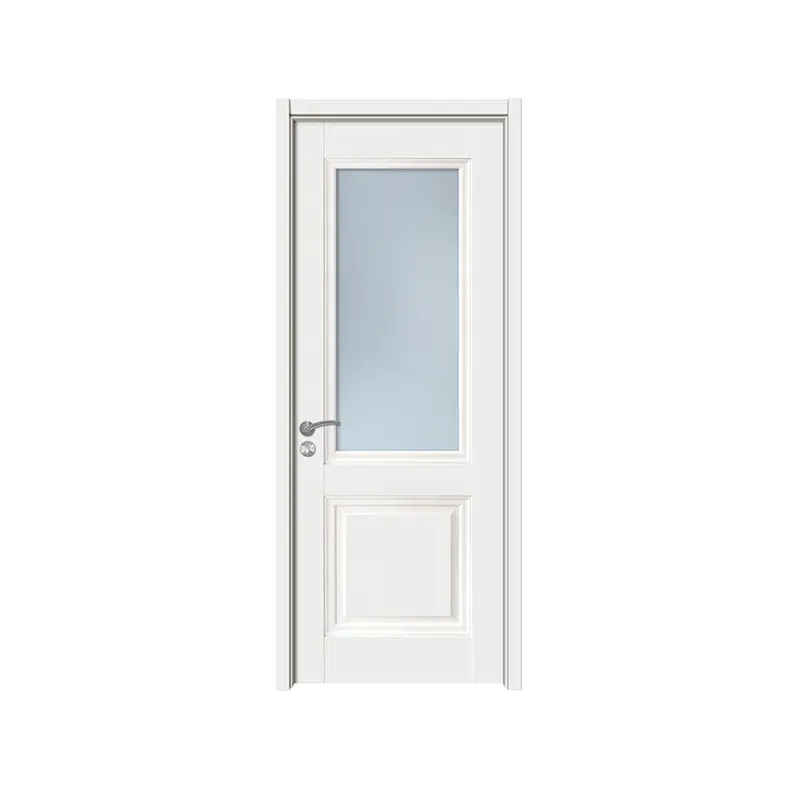
For buyers comparing MDF Doors for Bathroom, appearance is only part of the assessment. Board selection, machining accuracy, edge protection, coating preparation, hardware reinforcement, curing, inspection, and packaging all affect how the door behaves after installation.
Why Is Bathroom Use Different From Dry-Room Use?
MDF is made from wood fibers combined with resin and pressed into panels. Its smooth, uniform surface works well with paint, decorative film, routing, and molded profiles. Exposed MDF can absorb water, so bathroom suitability depends heavily on panel selection and how the manufactured door is sealed.
A bathroom door normally faces humidity rather than constant direct water contact. Even so, water can reach the lower edge during floor cleaning, settle near a poorly ventilated shower, or enter unsealed holes around hardware.
Several everyday conditions deserve attention:
- Steam may remain in the room after bathing.
- Wet flooring can expose the door’s lower edge to splashes.
- Damp towels may rest against the door surface.
- Cleaning liquids may collect around grooves and joints.
- Repeated handle use can wear the finish near the lock area.
- Limited ventilation can slow surface drying.
- Seasonal movement in the frame can affect door clearance.
A painted door described as suitable for bathrooms still needs sensible installation and ventilation. MDF should not be treated as an appropriate substitute for a wet-area panel inside a shower enclosure or another location exposed to regular flowing water.
How Does MDF Board Selection Affect the Door?
Manufacturing quality begins with the board entering production. A smooth coating cannot correct a panel that is poorly stored, damaged, or unsuitable for the intended room.
Moisture-resistant MDF is often considered for humid interior locations. The term refers to a panel formulated for improved behavior in damp conditions; it does not mean the raw board can remain submerged or exposed without protection.
| Board Consideration | Why It Matters |
|---|---|
| Intended use | Helps match the panel to a humid interior setting |
| Panel consistency | Supports accurate cutting and a uniform surface |
| Storage condition | Reduces the risk of moisture uptake before machining |
| Surface condition | Affects sanding, priming, and decorative finishing |
| Thickness consistency | Helps maintain alignment with frames and hardware |
| Supplier documentation | Clarifies board type and intended application |
Incoming panels should be checked for swollen edges, surface contamination, corner damage, bowing, and visible handling marks. A panel that has absorbed moisture in storage may create difficulties during machining or finishing.
Storage before production
MDF sheets should be stored flat, dry, and supported across their area. Leaning panels against a wall for a long period can contribute to bowing, while direct contact with a damp floor can affect the lower sheets in a stack.
Panels also need time to adjust to the production environment where appropriate. Moving cold material into a warm finishing area can create surface condensation, which interferes with sanding, adhesive application, and coating.
Board identification
Different MDF grades can appear similar after cutting. Production labels and material records help prevent a dry-room panel from being mixed with material assigned to a bathroom order.
Batch control is useful for large projects. It allows the manufacturer to trace a surface or machining issue back to the material used for a particular group of doors.
How Does Door Construction Affect Stability?
Not every MDF door uses the same internal construction. Some designs use a solid engineered panel, while others combine MDF faces with internal framing, reinforcement, or another core arrangement.
The chosen structure affects weight, stiffness, hardware fixing, machining depth, and handling. It also determines where locks, hinges, handles, and closers can be attached.
Solid and framed constructions
A solid engineered panel provides a continuous machining surface, which can suit routed patterns and painted profiles. Its weight needs to be considered when choosing hinges and preparing the frame.
Framed or composite constructions can reduce weight and place reinforcement in selected areas. The internal layout must be coordinated with the hardware plan so screws do not enter an unsupported cavity.
Neither arrangement should be judged from the outer face alone. Buyers need a construction drawing or clear product description showing the core, reinforcement, edge structure, and hardware zones.
Balance between both faces
Coatings and decorative materials can affect the way a panel responds to humidity. Applying different finishing systems to the two faces may contribute to uneven movement.
Manufacturers usually plan the front, rear, and edges as one finishing system. A decorative face paired with an untreated rear surface is a warning sign in a humid-room application.
Routed patterns require adequate material
Deep grooves and broad recessed areas remove material from the face. If routing approaches an internal cavity or weakens a narrow section, the panel may lose stiffness.
Decorative designs should account for:
- Remaining material beneath the groove
- Distance from door edges
- Position of locks and hinges
- Internal reinforcement
- Coating access inside recessed details
- Cleaning practicality after installation
Very detailed grooves can collect dust and moisture from routine cleaning. A simpler profile may be easier to wipe in a family bathroom or rental property.
Why Are MDF Edges Important?
Cut MDF edges expose more fibers than the broad face. They can absorb primer, adhesive, and moisture differently, so they require deliberate preparation.
The lower edge deserves close attention because it sits near wet flooring and cleaning water. Hinge recesses, lock pockets, handle holes, and trimmed openings also expose material that may not be visible after installation.
Edge preparation before finishing
Freshly cut edges may feel rough or porous. Sanding, sealing, priming, and checking create a more stable base for the selected finish.
A practical edge process may include:
- Cutting the panel with maintained tooling
- Removing loose fibers and machining dust
- Sanding without rounding required reference lines
- Applying a compatible sealer or primer
- Allowing the treatment to cure
- Sanding again where the process requires it
- Applying the specified decorative finish
- Checking corners, grooves, and lower-edge coverage
Heavy primer absorption at one location may indicate uneven sanding or a particularly porous area. Additional preparation may be needed before the decorative coat is applied.
Edge banding and wrapped finishes
Some door constructions use edge banding or a surface film wrapped around selected edges. Bonding quality depends on edge smoothness, adhesive compatibility, application conditions, and curing.
| Edge Detail | Inspection Focus |
|---|---|
| Straight side edge | Continuous finish without open seams |
| Upper edge | Full coverage and clean corners |
| Lower edge | Sealing against cleaning splashes |
| Hinge recess | Coated or sealed machined surface |
| Lock pocket | Protected exposed fibers |
| Film joint | Secure bond without lifting |
| Corner transition | No gaps, cracking, or loose material |
A decorative strip can hide an unfinished edge during a quick visual inspection. Buyers should confirm what treatment exists beneath or around the visible material.
Site trimming can break the protective system
Installers sometimes trim a door to correct floor clearance or fit an uneven frame. Cutting through the factory finish exposes the MDF core.
Any trimmed edge should be resealed with a compatible product before installation continues. The same principle applies when drilling new hardware holes on site.
How Does Machining Accuracy Influence Fit?
Cutting and routing determine the final dimensions, squareness, edge condition, decorative profile, and hardware locations. Errors at this stage can follow the door through finishing and become obvious during installation.
A door that is slightly out of square may rub against the frame or create an uneven gap. Incorrect hinge positions can make the installer alter the frame, redrill holes, or remove material from a finished surface.
Cutting equipment and tooling
Sharp, maintained tooling produces cleaner edges and reduces torn fibers. Worn cutters may create heat marks, rough grooves, or chipping that requires additional sanding.
Tool condition should be checked during a production run rather than only before work begins. MDF dust can also accumulate around equipment, affecting visibility, extraction, and machining cleanliness.
Reference surfaces
Production drawings need clear reference points for hinge recesses, lock positions, panel grooves, and door dimensions. Measuring some features from one end and others from the opposite end can allow small errors to combine.
Fixtures and templates help repeat common patterns. Customized work still needs an approved drawing that shows which dimensions are critical to installation.
Hardware preparation
Locks, hinges, handles, ventilation grilles, and closers place different demands on the door. Their positions should be confirmed before surface finishing begins.
Machining after coating can chip paint or tear decorative film. When site drilling cannot be avoided, installers need suitable tools and a method for sealing exposed material.
How Does Surface Preparation Affect the Finish?
MDF has a smooth face, but it still needs preparation before painting or laminating. Dust, fingerprints, adhesive residue, sanding scratches, and uneven primer can remain visible beneath the final finish.
Surface preparation is also important for adhesion. A decorative coating needs a clean and compatible base rather than a surface polished by contaminated sanding material.
| Surface Stage | Manufacturing Concern |
|---|---|
| Sanding | Produces an even base without deep scratches |
| Dust removal | Prevents particles from becoming trapped in the finish |
| Edge sealing | Reduces uneven absorption around exposed fibers |
| Priming | Creates a compatible layer for later coatings |
| Intermediate sanding | Removes raised fibers and minor irregularities |
| Decorative finishing | Provides the specified color and texture |
| Curing | Allows the coating to develop before handling |
| Visual inspection | Finds marks, thin coverage, and color variation |
Lighting matters during surface inspection. Side lighting can reveal ripples, sanding marks, dust particles, and shallow dents that are difficult to see under flat overhead illumination.
Paint systems
Painted MDF Doors for Bathroom need a coating system intended for the selected panel and room conditions. Primer, intermediate layers, finish coats, and sealers should be chemically compatible.
Thick coating does not automatically mean sound protection. Uneven application can leave thin areas around routed grooves, corners, hinge recesses, and lower edges.
Decorative film and laminate
Film-covered doors depend on substrate cleanliness, adhesive behavior, forming conditions, and edge treatment. Recessed profiles need controlled application so the material follows the shape without bridging or lifting.
Areas around sharp internal corners deserve inspection. A film that is stretched excessively may look acceptable after production but become vulnerable during cleaning or seasonal temperature changes.
Wood-look finishes
Wood patterns can help coordinate the door with cabinets or vanity units. Pattern direction should be agreed before production, particularly when several doors will be installed in the same corridor or apartment.
Color samples should be viewed under lighting similar to the project environment. Bathroom lighting, daylight, and showroom lighting can make the same surface appear different.
Why Does Curing Time Matter?
A coating may feel dry at the surface while remaining vulnerable beneath. Packing or machining too soon can cause pressure marks, blocking between faces, edge impressions, or damage around hardware areas.
Curing conditions depend on the coating process, air movement, temperature, humidity, and layer thickness. Production planning needs to include adequate time between finishing, inspection, and packaging.
Doors should not be stacked while the finish remains soft. Protective sheets can also mark a coating if they are applied before the surface is ready.
Manufacturers need a defined release point for handling. Relying only on a quick touch can produce inconsistent decisions between workers or production shifts.
How Do Hardware Areas Affect Door Quality?
Bathroom doors often carry hinges, a latch, privacy hardware, handles, and sometimes a ventilation grille. Each opening interrupts the finished surface and creates a local load on the door structure.
Hardware positions should correspond with the frame and installation drawing. Reinforcement may be needed where screws enter the panel or internal core.
Hinge preparation
The hinge area carries the door during every opening cycle. Recess depth, screw location, door weight, and frame condition all influence movement.
A recess that is too deep can alter the gap at the frame. A shallow recess may prevent the hinge leaf from sitting flat, creating stress around screws and finished edges.
Lock and handle preparation
Lock pockets remove material near the door edge, where moisture protection already requires attention. Machined surfaces should be clean and sealed according to the door system.
Handle holes need accurate alignment on both faces. Misaligned drilling can damage the finish when installers attempt to enlarge the opening.
Ventilation openings
Some bathroom projects use grilles or under-door clearance to support airflow. These features should be planned with the room ventilation design rather than added casually after delivery.
A grille cutout creates several exposed edges. The opening needs suitable reinforcement and edge finishing before the grille is installed.
What Manufacturing Choices Apply to Custom MDF Doors?
Custom MDF Doors may involve non-standard dimensions, routed designs, special colors, unusual frame conditions, or project-specific hardware. Customization becomes useful when it responds to a real architectural or installation requirement.
It also creates more opportunities for misunderstanding. A visual reference image does not define thickness, edge construction, finish system, hardware position, or acceptable dimensional variation.
Information required before production
A practical custom-door specification can include:
- Finished door dimensions
- Door and frame relationship
- Opening direction
- Hinge type and position
- Lock and handle preparation
- Core or construction preference
- Face profile and routing depth
- Edge treatment
- Color or finish reference
- Ventilation detail
- Intended bathroom location
- Packaging and identification needs
The word “bathroom” should be supported by a description of the room. A ventilated residential bathroom presents different exposure from a changing room, public washroom, or door close to an open shower.
Sample approval
A sample or finish panel helps the buyer review color, texture, edge appearance, routed details, and cleaning feel. For a new door structure, a full sample can also confirm hardware fit and frame clearance.
Approval records should identify the drawing revision and finish reference. A signed sample with no connection to current production documents can create confusion when changes occur later.
Design changes
Moving a groove, handle, or hinge may affect internal reinforcement and machining. A change that appears decorative can therefore require another structural review.
Revised drawings should replace earlier versions in purchasing, production, inspection, and packaging. Informal instructions sent through separate messages are easy to miss.
How Does Wholesale Production Change Quality Control?
A Wholesale MDF Door order may contain repeated designs, several dimensions, mirrored opening directions, or different hardware preparations. The challenge is not only producing each door correctly but also keeping all versions separated and traceable.
Production planning can group doors by material, machining program, finish, and hardware pattern. Clear part numbers help prevent two similar-looking doors from entering the wrong room package.
| Wholesale Control Area | Practical Action |
|---|---|
| Material batches | Record panels used for each production group |
| Machining files | Link approved programs to door references |
| Finish batches | Monitor color and sheen across related doors |
| Hardware patterns | Separate hinge and lock configurations |
| Inspection | Check representative units and critical features |
| Labels | Identify room, opening direction, and model |
| Packaging | Protect faces, corners, and edges during transport |
| Shipment planning | Group doors around the site installation sequence |
A Wholesale MDF Door program may benefit from a pilot production batch before the wider order proceeds. This gives the project team an opportunity to review installation fit, color, hardware alignment, and packaging under realistic conditions.
Color consistency
Paint and decorative film can vary between production batches. Doors intended for the same visible area should be planned with batch coordination in mind.
Stored reference samples need protection from light, dirt, and aging. A damaged reference is not a reliable basis for later color comparison.
Mixed door schedules
Hotels, apartments, offices, and residential projects may use similar bathroom doors with different widths, handing, locks, or ventilation details. Labels should remain visible after packaging.
Room-based packing can reduce sorting at the site. It also helps installers avoid opening several packages while looking for one specific door.
Why Is Inspection Important Before Packing?
Inspection connects the approved specification with the finished product. It should cover dimensions, appearance, edge protection, hardware locations, and packaging readiness.
A door can look clean on its broad face while carrying an unsealed lower edge or incorrectly placed hinge recess. Inspection needs to include the areas that are less visible during ordinary display.
Dimensional checks
Inspectors may review:
- Door height and width
- Thickness
- Squareness
- Straightness
- Hinge locations
- Lock and handle positions
- Groove placement
- Ventilation opening
- Clearance-related dimensions
Measurements should refer to the approved drawing. Comparing one finished door with another can repeat the same error across the batch.
Surface and edge checks
The surface can be viewed under both direct and angled light. Edges, corners, grooves, film joints, and machined openings deserve separate attention.
Inspectors can look for:
- Dust trapped beneath the finish
- Sanding marks
- Dents and handling damage
- Uneven color or sheen
- Thin coating in routed areas
- Open edge joints
- Film lifting
- Exposed MDF fibers
- Cracks around hardware openings
Functional sample fitting
Where practical, a sample door can be fitted to the specified frame and hardware. This check can reveal issues that individual measurements do not show clearly.
Hinges should sit correctly, the latch should align, and the door should move without rubbing. The test frame needs to represent the project specification rather than an unrelated workshop frame.
How Does Packaging Affect the Delivered Door?
Manufacturing work can be undone during storage and transport. MDF doors need protection from rain, floor moisture, sharp objects, strap pressure, and unsupported stacking.
Corner guards, face protection, edge materials, and stable pallet support can reduce handling damage. Protective packaging should not trap a newly finished surface before curing is complete.
Storage orientation
Doors should be stored according to the manufacturer’s instructions. Poor support can contribute to bowing, while direct contact with concrete may expose the packaging to moisture.
At the building site, doors should remain away from ongoing wet work. Fresh plaster, floor screeds, painting, and open exterior walls can create humid conditions that differ from the finished room.
Package identification
Labels can include the door reference, finish, dimensions, opening direction, and room allocation. Information should be readable without removing all protective material.
For a Wholesale MDF Door shipment, a packing list linked to package labels helps receiving teams identify missing or damaged items before installation begins.
What Should Installers Do on Site?
A suitable bathroom door can still develop problems when installed in an unfinished or poorly ventilated room. Site conditions deserve the same attention as factory processing.
Installers should inspect packages for water damage before opening them. Doors need to be checked against their labels and drawings before hinges or locks are fitted.
Practical site habits include:
- Store doors in a dry, enclosed area.
- Keep packages away from wet flooring.
- Inspect the frame for square and alignment.
- Avoid forcing a door into an unsuitable opening.
- Reseal every trimmed or drilled MDF surface.
- Use hardware suited to the door construction.
- Maintain planned floor and frame clearances.
- Test the latch and hinges before final handover.
- Confirm that room ventilation is operating.
- Clean the finish with compatible products.
Door clearance should account for the finished floor, not the unfinished substrate. Tile, adhesive, thresholds, and bathroom mats can change the available space beneath the door.
How Can Users Care for MDF Bathroom Doors?
Daily care has a direct effect on the finish and edges. Water should not be allowed to remain around the lower edge or pool against the frame.
The door can be wiped with a soft, lightly damp cloth and then dried. Strong solvents, abrasive pads, and prolonged soaking may damage paint, film, edge materials, or adhesive.
Bathroom ventilation should run during and after bathing according to the room design. Persistent condensation on walls and doors may indicate that ventilation or airflow needs attention.
Users should also watch for early changes:
- Swelling near the lower edge
- Film lifting around corners
- Cracking near hinges
- Loose handles
- A latch that begins rubbing
- Discoloration around an edge
- New difficulty opening or closing
A change in door movement does not always come from the panel. Loose hinges, frame movement, flooring changes, or building settlement may also affect clearance.
Practical Manufacturing Priorities
The quality of MDF Doors for Bathroom depends on connected production decisions. Suitable board selection provides the starting material, while accurate machining establishes the shape, hardware positions, and decorative details.
Edge sealing, balanced surface finishing, controlled curing, and careful inspection help protect the manufactured structure. Packaging and site handling carry that work through to installation.
For Custom MDF Doors, approved drawings and representative samples reduce uncertainty around dimensions, profiles, colors, and hardware. For a Wholesale MDF Door order, batch organization, clear labeling, traceable inspection, and project-based packaging help maintain consistency across multiple openings.
A bathroom door performs well when its panel, edges, finish, hardware, frame, and room conditions are considered together. Manufacturing establishes the door’s foundation, while correct installation, ventilation, and routine care support its behavior in everyday use.
Interested in cooperation or have questions?


 +86-13857003056
 No. 27 Lianhuashan Avenue, Jiangshan Economic Development, Jiangshan, Quzhou, Zhejiang, China
Copyright © Zhejiang Kings Home Decor Co., Ltd. All Rights Reserved.

Interior Wood Door Manufacturer