

 English
 русский
 Français
 Español
 عربى
How Do Safestyle Composite Doors Handle Every Season
Anyone who has stood on a doorstep fumbling for keys in a downpour knows how much a front door takes. It faces driving rain in autumn, frost on winter mornings, gusts that rattle the letterbox, and strong sunlight in summer that fades whatever it falls on. A front door does more than let people in. It keeps the weather out, holds the warmth in, and still has to look good in every season.
Safestyle Composite Doors are built with that job in mind. They combine a durable outer face, an insulating core, and sealing details around the frame, so each layer handles a different part of the weather. Knowing what each part does makes it easier to choose a door and to spot trouble early.
What a Composite Door Is Made Of
A composite door is not one material. It brings several together. The outer skin is usually glass-reinforced plastic, known as GRP, which is moulded to give a woodgrain look. Beneath it sits an insulating core, and around the edges are the frame, seals, and fittings that let the door close snugly.
The skin takes the daily abuse from rain, sun, dirt, and ordinary knocks. Compared with an exposed timber door, it doesn't rely on the same routine of sanding and repainting to stay presentable. The core slows the passage of heat through the door, which you notice as a warmer hallway on a cold day. Safestyle describes its composite range as having a high-density thermal insulation core and a multi-chamber frame, designed to support insulation and structure.
These pieces work as one system. A strong door in a poorly fitted frame will still let in draughts, and a well-made frame with worn seals will do the same. When something goes wrong, the cause is often at the edges rather than in the panel.
Rain and Damp
Rain seldom beats a door head-on. It runs down the face, pools at the threshold, and finds the smallest gap along the frame, especially when wind pushes it sideways. A GRP face resists moisture absorption, so the panel itself isn't where trouble usually starts.
The edges and joints are where to look. Weather seals and gaskets form a close barrier between door and frame, and they only work if they sit properly and touch evenly. Threshold design matters too, because water needs somewhere to go other than under the door.
After a long wet spell, take a minute to check. Look at the floor just inside the door for damp patches. Clear leaves and grit from the threshold so water can drain away. Run a finger along the seals to see whether any have flattened, split, or slipped out of place. If water still appears indoors, avoid guessing. A fitter can tell whether the cause is the seal, the threshold, the frame, or something in the wall around the opening.
Cold Mornings and Draughts
Winter shows up weaknesses that summer hides. A room can feel cold even with the heating on if air is slipping around the door edges. Brush seals help here by closing the small spaces between door and frame while still letting the door swing freely. Together with the insulated core, they help a hallway stay comfortable.
Glazing plays a part as well. A door with glass panels loses or keeps heat according to the glass, and the frame must hold it securely. If the door feels cold to touch or you can feel moving air on your ankles, the problem might lie with the glazing, the threshold gap, or the seals.
Seasonal changes also affect how a door sits. Materials expand and contract slightly through the year, and a frame can shift a little. A door that suddenly catches on the frame in January, or leaves a visible gap in July, deserves a look. Forcing it closed makes things worse. A qualified installer can adjust hinges and keeps, which is usually a quick job.
Wind and Noise
Wind finds every weakness. Gusts push against the door and slip through gaps, causing whistling, rattling, and the sensation of cold air near the frame. Many people assume a damaged panel is to blame, yet worn seals, loose fittings, or poor alignment are more common causes.
Signs worth listening for include a whistling sound on blustery nights, a cold stream of air by the frame, a door that moves in its opening when closed, and seals that touch unevenly. Each of these points to the fit rather than to the door itself.
A simple test on a windy day tells you a lot. Close the door, then run the back of your hand slowly around the edges and along the bottom. Cooler moving air shows where the seal isn't doing its job. Note the spot, because a fitter can often cure it by adjusting the door in its frame or replacing a short length of seal, without touching the panel at all.
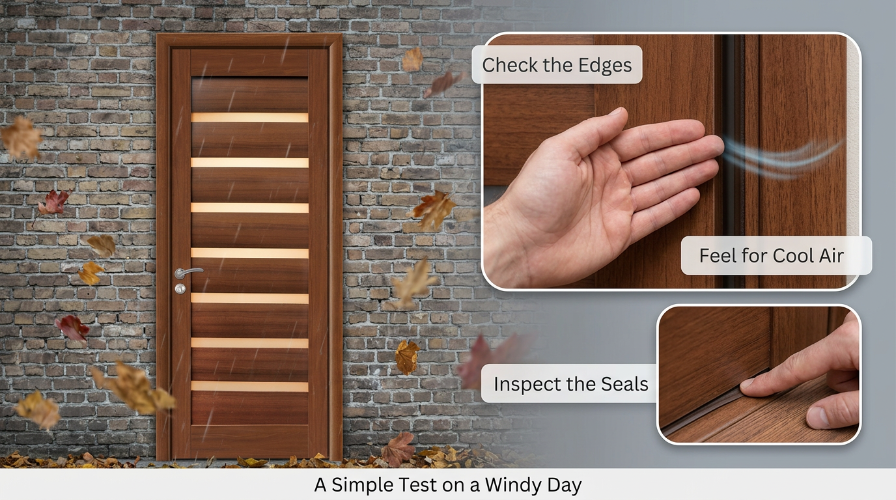
This is why installation matters so much. Accurate measurement, careful preparation of the opening, secure fixing, and correct threshold placement all affect how the finished door behaves in the wind. Safestyle offers made-to-measure composite doors with professional fitting, so the door and frame are made for the existing opening instead of being adapted on site. A good fitter also checks alignment, sealing, and the locking system before leaving.
Sunlight and Colour
Sun is slower than rain or wind, but it matters. Repeated exposure can gradually change colours and finishes, particularly on a south-facing doorstep that gets direct light all day. GRP is designed to cope with outdoor conditions, though appearance still depends on the finish, the colour, and how the door is cared for. Check the manufacturer's guidance when choosing a shade, especially for darker colours on exposed entrances.
Colour also shapes how the whole house looks. A deep tone can stand out against pale brick, while softer shades suit a traditional or cottage-style frontage. Think about how much sun reaches the door, how the colour sits with window frames and walls, and how easy the finish is to keep clean. Safestyle offers traditional, contemporary, and cottage-style designs with a range of colour and glazing options, which gives homeowners room to match the door to the property.
Looking After the Door
Composite doors reduce the upkeep that timber demands, but no external door looks after itself. A simple routine keeps things in good order.
Wipe away loose dust and pollen with a soft cloth. Wash the surface with mild detergent and water, rinse off any residue, and dry it with a clean soft cloth. Skip abrasive pads and harsh cleaners, which can dull a finish. Follow the care instructions supplied with your door, especially for decorative or painted surfaces.
Every so often, look at the details. Check that the seals are intact, the hinges move smoothly and are fastened tightly, the lock operates without sticking, the threshold is clear, and the frame shows no gaps or signs of movement. A drop of suitable lubricant on moving parts can keep a lock feeling smooth, as long as the manufacturer's advice allows it.
If the door becomes stiff, hard to lock, or uneven when closing, don't force it. Misalignment gets worse with force. An installer can adjust the fittings and usually spots the cause quickly.
Questions to Ask When Choosing
Colour and glass are easy to compare in a brochure. The less visible parts decide how the door behaves over the years, so it is worth asking about them.
Ask what the core is made of and how the frame is built. Ask how the seals are arranged, including brush seals and gaskets. Ask what the fitting process involves, who carries it out, and what aftercare comes with the door. Safestyle also offers a guarantee on its composite doors, subject to its terms and exclusions, so read the current conditions and product details before ordering.
Match the door to the house, too. Traditional properties often suit classic panel designs with decorative glass, contemporary homes tend to look right with cleaner lines and understated finishes, and cottage-style houses suit characterful panels and softer colours. A renovation might call for coordinated colours and glazing across the whole frontage.
When the Door Starts to Misbehave
A front door lives in the weather, and it shows. A sound one keeps rain out, keeps warmth in, stays quiet in the wind, and holds its colour through the seasons. Safestyle Composite Doors combine a durable skin, an insulated core, and sealing details to support that, and careful fitting and simple upkeep keep it working. If a door at your home whistles, sticks, or lets in damp, treat it as a sign to look at the seals, the threshold, and the fit before blaming the panel.
Interested in cooperation or have questions?


 +86-13857003056
 No. 27 Lianhuashan Avenue, Jiangshan Economic Development, Jiangshan, Quzhou, Zhejiang, China
Copyright © Zhejiang Kings Home Decor Co., Ltd. All Rights Reserved.

Interior Wood Door Manufacturer