

 English
 русский
 Français
 Español
 عربى
MDF Combined Doors vs MDF PVC Doors: Which Fits Your Project
Choosing between MDF Combined Doors and MDF PVC Doors is not always straightforward. The two may look similar in a catalogue, yet their construction and surface finishes can be quite different. For door importers, wholesalers, contractors, and interior designers, those differences matter when selecting products for a particular market or building project.
MDF is commonly used for interior doors because it provides a smooth base for decorative finishes. The challenge is that the term MDF Combined Doors can cover different constructions, while MDF PVC Doors usually refers to an MDF door finished with PVC film.
If you are comparing these options for an upcoming order, start with three questions: How is the door made? Where will it be installed? What finish and maintenance requirements does the project involve? These questions are more useful than choosing a door based on its name alone.
What Separates MDF Combined Doors from MDF PVC Doors?
The main difference is the way the door is constructed and finished. However, product names can vary between manufacturers, so it is worth checking the actual specification before comparing two models.
MDF Combined Doors: Look Beyond the Name
MDF Combined Doors use medium-density fiberboard as part of a door structure that may include other materials or components. The precise construction depends on the product design and the manufacturer's definition of a combined door.
MDF itself is made from wood fibers bonded with resin under heat and pressure. Its smooth surface makes it suitable for different panel designs and finishing methods.
For buyers, the important question is what the door combines. Does the model use additional materials in its structure? How is the visible surface finished? Are there any restrictions on installation or later adjustment?
These details can vary from one product to another. A buyer sourcing doors for an apartment project, for example, needs to know what will actually arrive rather than relying on a general product description.
When requesting a quotation, ask the supplier to explain the construction of the specific model. This makes it easier to compare products on equal terms.
MDF PVC Doors: The Surface Makes the Difference
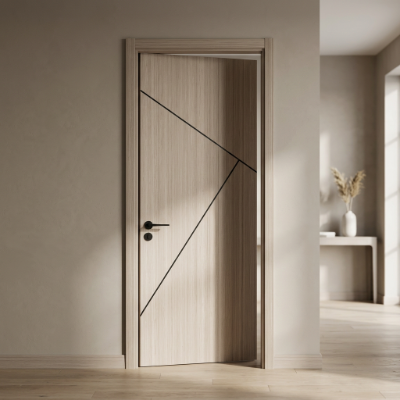
MDF PVC Doors have a more clearly defined structure. The MDF board forms the base, while PVC film provides the decorative surface.
The film can come in different colors, patterns, and textures. Wood-grain finishes are an option for interiors that use natural-looking tones, while plain finishes can work with simpler furniture and wall designs.
This type of finish is also relatively easy to care for during normal indoor use. Routine cleaning generally involves a soft cloth and a suitable cleaner, following the manufacturer's instructions.
There is a practical limitation to keep in mind. PVC film covers the door surface, but it does not make the MDF core waterproof. If moisture gets into an exposed edge or a damaged section, the board may swell or deteriorate.
For this reason, the surface alone should not determine whether a model is suitable for a particular room. Edge treatment, bonding quality, and the conditions at the installation site also need attention.
Comparing the Two Door Types Before You Buy
| What to Check | MDF Combined Doors | MDF PVC Doors |
|---|---|---|
| Construction | MDF combined with other materials or components, depending on the design | MDF base with a PVC film finish |
| Appearance | Depends on the materials and finishing method | Depends on the available film colors, patterns, and textures |
| Design requirements | Confirm which panel styles and finishes are available | Check the available surface designs and door styles |
| Routine care | Depends on the finished surface | Generally straightforward with suitable cleaning methods |
| Moisture exposure | Depends on the full construction and protective treatment | Covered areas have a PVC layer, but exposed MDF remains vulnerable |
| Installation | Check fitting requirements and permitted adjustments | Pay attention to film edges and possible damage during fitting |
| Purchasing focus | Material combination and structural details | Film finish, bonding, and edge coverage |
There is no single answer that applies to every project. A combined door may suit a particular design requirement, while a PVC-finished model may be easier to coordinate across rooms. Neither description, by itself, tells you how long a door will last or whether it is suitable for a specific environment.
That is why product specifications and samples deserve a closer look before an order is confirmed.
Which Door Makes Sense for Your Interior?
The intended use often narrows the options more quickly than appearance alone. A bedroom door, a bathroom door, and a door for a busy commercial building do not face the same conditions.
When a Combined Construction May Be Suitable
MDF Combined Doors are worth considering when the project calls for a particular construction or a combination of materials.
For example, a developer may need a door design that works with other interior components or follows a specific architectural style. Depending on the manufacturer's range, a combined construction may provide a suitable option.
However, the term does not guarantee a particular design feature or performance level. Some models may offer different finishing choices, while others may have a more specific construction purpose.
Before making a decision, review the actual model rather than assuming that all combined doors offer the same options. If the door needs to match wardrobes, wall panels, or other interior products, request samples and check how the finishes work together.
When MDF PVC Doors May Be a Practical Choice
MDF PVC Doors are worth looking at when a project needs a defined decorative surface that is easy to maintain during everyday use.
Consider a residential development with several apartments. The buyer may want the bedroom doors to share a similar appearance, even when the furniture and wall colors differ slightly between units. Choosing a consistent PVC finish can help keep the overall design coordinated.
The same consideration applies to renovation work. A suitable wood-effect or plain finish can complement the existing interior without requiring a complicated surface treatment.
For wholesalers, it is useful to confirm which finishes are available for repeat orders. If a customer later needs additional doors, having a clear finish reference can make the purchasing process easier.
Does the Room Affect Which Door You Should Choose?
It certainly can. Temperature, humidity, ventilation, and the way a room is used all influence the conditions a door will face.
Bedrooms and Living Areas
These rooms are common applications for interior MDF doors. Buyers usually pay attention to appearance, privacy, cleaning, and compatibility with the surrounding furniture.
Both door categories may work in these spaces when the individual product is designed for the intended use.
One detail that is easy to overlook is the relationship between the door and the rest of the interior. A finish that looks attractive on a small sample may appear different when installed beside flooring or a large wardrobe. Comparing samples under the room's lighting can help avoid an unexpected result.
For replacement projects, check the existing frame and opening as well. A door that suits the design still needs to fit the installation.
Kitchens and Bathrooms
Moisture deserves more attention in kitchens and bathrooms. Steam, condensation, and splashes can affect MDF if water reaches areas that are not adequately protected.
An MDF PVC Door has a film covering the visible surface, but the edges and any damaged areas remain important. MDF Combined Doors also need to be assessed according to their actual materials and protective finish.
Before ordering, ask whether the selected model is intended for the conditions in that room. Consider the ventilation, the likelihood of direct water contact, and the manufacturer's maintenance recommendations.
Do not assume that a door is suitable for a wet area simply because its surface is easy to wipe clean.
Apartments, Hotels, and Other Multi-Unit Projects
Large projects bring a different set of concerns. Purchasing teams may need to coordinate finishes across many rooms, arrange deliveries around construction schedules, and plan for replacement products in the future.
For these projects, consistency is often as important as the initial design choice. Buyers should confirm the agreed model, surface finish, and construction details before production begins.
It is also worth discussing packaging and delivery arrangements with the supplier. Doors can be vulnerable to scratches, damaged edges, and handling issues during transport. Clear arrangements help the contractor plan for receiving and installation.
Five Checks to Make Before Confirming an Order
A catalogue can help you shortlist products, but it rarely answers every question a buyer needs to resolve. Before placing an order, work through these points with the supplier.
1. Get the Construction Details in Writing
Ask what materials are used in the door and how the finished product is assembled.
For MDF Combined Doors, clarify the material combination and surface treatment. For MDF PVC Doors, check the film finish, bonding method, and edge coverage.
Written specifications help prevent misunderstandings when products from different suppliers have similar names.
2. Approve the Surface Finish
Color and texture are easier to judge from a physical sample than from a screen. Lighting, display settings, and photography can all affect how a finish appears.
If the order covers several rooms or buildings, keep a record of the approved sample. This gives the buyer and supplier a shared reference when discussing production.
3. Check the Installation Requirements
Confirm the door dimensions, frame compatibility, hinge positions, and required clearances before production.
Ask whether the door can be trimmed or modified during installation. Depending on the construction, cutting may expose the core or damage the finished edge.
Passing the installation requirements to the supplier early can save time when the doors arrive on site.
4. Understand the Care Instructions
Different surface finishes may need different cleaning methods. PVC film generally allows routine wiping with a soft cloth and a suitable cleaner, but the manufacturer's instructions should take priority.
Avoid harsh chemicals, abrasive pads, and unnecessary exposure to water. For rental properties and hotels, straightforward care instructions are useful for maintenance staff who handle many rooms.
5. Compare Quotations on the Same Basis
A lower quotation does not necessarily mean that two products are equivalent. The construction, surface finish, hardware requirements, packaging, and delivery arrangements may differ.
Ask each supplier to quote against the same product requirements. For larger orders, clarify what is included in the price and whether the specified finish and construction will remain consistent throughout the order.
This gives procurement teams a clearer basis for evaluating the available options.
Common Questions from Door Buyers
Are MDF Combined Doors and MDF PVC Doors the Same?
No. MDF Combined Doors can refer to different constructions involving MDF and other materials or components. MDF PVC Doors use an MDF base with a PVC film surface. Since terminology can vary between manufacturers, check the individual product specification.
Can MDF PVC Doors Be Installed in Bathrooms?
Some models may be suitable for certain bathroom conditions, but this should be confirmed with the manufacturer. The PVC surface does not eliminate the moisture sensitivity of exposed MDF edges or damaged areas.
Are Both Types Available in Different Designs?
That depends on the manufacturer's product range. Combined doors may vary in construction and finishing, while PVC-finished doors can be available in different colors, textures, and patterns. Requesting samples is a practical way to compare the available options.
What Should Importers and Wholesalers Confirm?
Buyers should check the material structure, available finishes, customization options, minimum order requirements, production schedule, packaging, and delivery terms. For repeat orders, it is also useful to agree on a product specification and finish reference.
Making a Decision That Fits the Project
The choice between MDF Combined Doors and MDF PVC Doors comes down to the actual product and the job it needs to do.
For a project with specific construction requirements, start by examining how the combined door is made and whether it meets the intended use. If the priority is an MDF door with a decorative PVC surface, compare the available finishes and pay close attention to edge treatment and installation conditions.
When sourcing from Zhejiang Kings Home Decor Co., Ltd., buyers can begin by reviewing the available door designs and asking for the construction details of the models under consideration. The room conditions, approved finish, fitting requirements, and order schedule should all be clear before production is confirmed.
A door may seem like a small part of an interior project, but choosing the right specification makes purchasing, installation, and later maintenance easier to manage.
Interested in cooperation or have questions?


 +86-13857003056
 No. 27 Lianhuashan Avenue, Jiangshan Economic Development, Jiangshan, Quzhou, Zhejiang, China
Copyright © Zhejiang Kings Home Decor Co., Ltd. All Rights Reserved.

Interior Wood Door Manufacturer