

 English
 русский
 Français
 Español
 عربى
عربىWhy MDF PVC Doors Resist Moisture and Door Swelling Better
A door that used to close cleanly now drags against the frame. Or worse, it swells so much along one edge that it barely latches at all anymore. Anyone managing a coastal property, a hotel near the water, or even just a home bathroom that stays damp after every shower has run into this problem, and it is exactly why MDF PVC Doors keep showing up in searches from people trying to figure out what actually holds up in humid conditions. Moisture does not announce itself loudly. It works slowly, swelling a little here, warping a little there, until one day the door simply will not behave the way it used to. Interior designers, hotel project managers, property developers, contractors, building material importers, and door distributors all eventually run into this exact conversation with a client or a project team. Why does this keep happening, and which door construction actually resists it rather than just delaying the inevitable by a season or two? The answer usually comes down to a combination of core material, surface finish, and edge protection working together, rather than any single feature carrying the entire burden on its own.
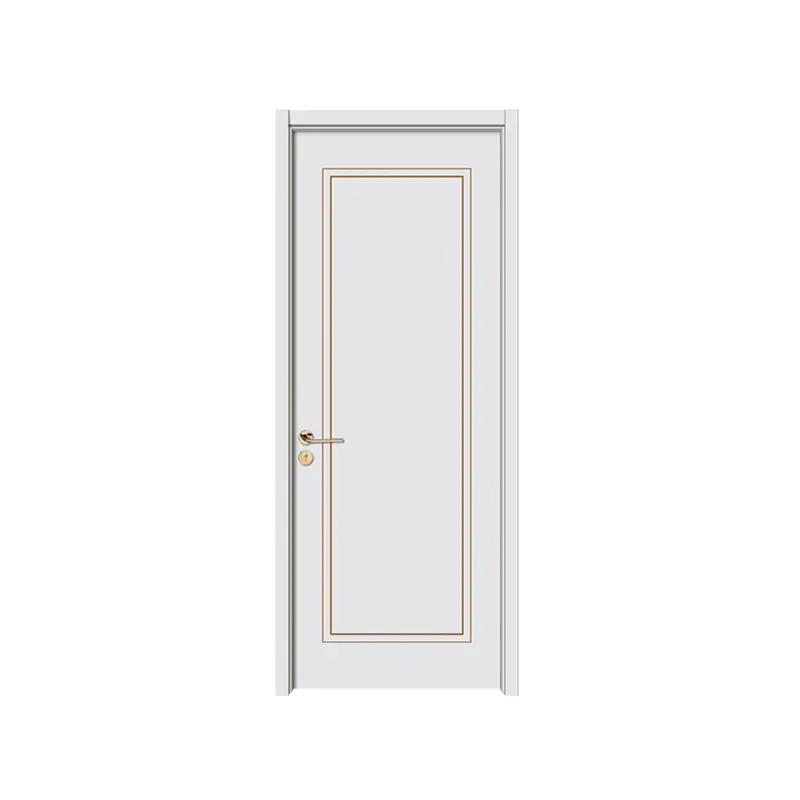
Why Do Doors Warp and Swell in Humid Environments?
Wood, and wood based materials generally, absorb moisture from the surrounding air. That absorption is not uniform across a door panel either, which is exactly where the trouble starts. One side exposed to more humidity than the other, uneven moisture penetration through an unsealed edge, temperature swings that expand and contract material at different rates. All of it adds up to a door that no longer sits flat or closes the way it did on installation day.
A handful of causes show up again and again in humid climate complaints:
- Moisture absorption into the core material, particularly at edges or corners left unsealed or under sealed
- Poor factory sealing, where a finish looks complete on the surface but leaves gaps at edges where moisture can sneak in
- Core material expansion, since some substrates swell more dramatically than others when saturated
- Repeated temperature and humidity cycling, which stresses the material differently than constant, stable conditions would
- Installation gaps or clearance issues that allow moisture to reach unprotected surfaces the finish was never meant to expose
Does Humidity Cause Warping Immediately, or Does It Build Up Over Time?
It builds up, almost always. A single humid day does not warp a door. Repeated exposure, cycle after cycle of absorption and drying, gradually stresses the material until visible warping or swelling finally shows up. This is part of why the problem catches so many property owners off guard. The door performed fine for months, sometimes longer, before the cumulative moisture exposure finally pushed it past the point where the material could hold its original shape.
Is MDF Actually as Vulnerable to Moisture as People Assume?
This question comes up constantly, and the honest answer is: it depends heavily on how the MDF was finished and protected, not on the base material alone.
MDF Door Vs Solid Core, Which Handles Moisture Better?
Raw, unprotected MDF does absorb moisture readily, more so than some solid wood species in certain conditions, since its manufacturing process creates a material with considerable surface area exposed to whatever finish gets applied. Solid core doors carry their own moisture sensitivity too, though, particularly around grain lines and joints where natural wood variation creates uneven absorption points. Once a proper moisture resistant finish gets applied, MDF actually performs quite consistently, since its uniform density means the finish bonds evenly across the entire surface rather than dealing with the natural inconsistencies solid wood grain introduces.
Does This Mean MDF Without Protection Is a Poor Choice for Damp Areas?
Bare MDF, yes, generally a poor choice for bathrooms, coastal buildings, or any consistently humid environment. But that is really an argument for proper finishing rather than an argument against MDF as a core material altogether. The distinction matters, since dismissing MDF outright ignores how much the surface treatment actually determines real world performance in humid conditions.
How Does PVC Coating Improve Moisture Resistance?
PVC film creates a continuous, water resistant barrier across the door surface, which is precisely what stops moisture from reaching the core material underneath to begin with.
Why Does PVC Outperform Standard Paint in Humid Conditions?
Paint sits as a thinner layer, and over time, especially with repeated humidity exposure, it can develop small cracks or gaps where moisture eventually finds its way through to the core. PVC, bonded as a continuous film rather than a thin surface coating, resists that kind of gradual breakdown considerably better, holding its seal against moisture penetration across years of humid exposure rather than months. PVC MDF Door options specifically address this vulnerability, wrapping the surface in a barrier that paint simply cannot replicate over the long run.
Does the Edge Sealing Matter as Much as the Face Finish?
Arguably more, honestly. A beautifully finished door face means little if moisture sneaks in through an unsealed or poorly sealed edge. Edges take on water readily since they expose more of the raw core material structure compared to a flat face. Proper edge sealing, wrapping that PVC or moisture resistant finish fully around the door rather than stopping at the visible panel face, closes off the exact entry point where a large share of humidity related swelling actually begins.
Comparing Door Finishes for Humid Environment Performance
| Finish Type | Moisture Resistance | Swelling Risk | Suited Environment |
|---|---|---|---|
| Bare or Unfinished MDF | Poor, absorbs moisture readily | High | Not suited to humid conditions |
| Painted Surface | Moderate, can crack over time | Moderate to high over years | Drier climates or interior spaces away from moisture |
| PVC Coated MDF | Good, continuous moisture barrier | Low | Bathrooms, coastal buildings, hotels near water |
| Solid Core Wood | Moderate, varies by species and sealing | Moderate | Depends heavily on finish quality and maintenance |
Looking across this comparison, PVC coated construction consistently performs well in genuinely humid conditions, particularly once edge sealing gets factored into the equation alongside the main surface finish.
Which Humid Environments Benefit Considerably From This Kind of Door?
Not every space faces the same moisture challenge, so matching door specification to actual exposure conditions avoids both wasted budget and premature failure.
- Bathroom doors, where steam and splash exposure happen daily, sometimes multiple times a day in commercial or hospitality settings.
- Hotel properties near coastal areas, where ambient humidity stays elevated year round regardless of interior climate control.
- Hospital and healthcare corridors, where frequent cleaning and sanitizing introduce repeated moisture exposure beyond typical ambient humidity.
- Apartment buildings in humid climate regions, where consistent moisture in the air affects every interior door over time, not just those in bathrooms.
- School facilities with locker rooms, cafeterias, or other high moisture zones that see repeated humidity cycling throughout a typical day.
Do MDF Doors for Bathroom Applications Need Additional Consideration Beyond General PVC Coating?
Generally, yes. MDF Doors for Bathroom settings typically call for enhanced edge sealing and sometimes waterproof rated hardware preparation, since bathrooms combine both airborne humidity and direct water splash exposure in a way many other rooms do not experience. A standard PVC coated door built for general humidity resistance may still fall short in a shower adjacent application without this additional attention to sealing detail.
How Should Buyers Reduce Long Term Maintenance Costs Through Material Selection?
Getting the material and finish choice right upfront tends to save considerably more than any maintenance routine could recover after the fact.
- Confirm PVC coating extends fully around door edges, not just across the visible face, before finalizing a specification.
- Request moisture resistance testing documentation relevant to the intended climate and application, rather than relying on general marketing claims alone.
- Consider Custom MDF Doors sizing and hardware preparation specifically suited to bathroom, coastal, or other high humidity project requirements.
- Evaluate installation clearances carefully, since gaps that are too tight can trap moisture while gaps too generous allow airflow that carries humidity directly against unprotected surfaces.
- Ask about Wholesale MDF Door options for larger commercial projects, since bulk sourcing consistent finish quality across dozens of units matters for uniform long term performance.
- Factor seasonal humidity swings into the specification conversation early, since a property experiencing only occasional dampness has different needs than one facing sustained tropical or coastal exposure throughout the year.
Does Installation Practice Affect Moisture Resistance as Much as Material Choice?
It really does. A well built, properly finished door can still warp or swell if it goes into the frame the wrong way.
What Installation Details Actually Matter in Humid Settings?
Clearance gaps around a door need careful attention. Too tight, and the door has nowhere to expand slightly without binding against the frame during humid stretches. Too loose, and airflow around the gaps carries moisture directly against edges that were never meant to face that kind of constant exposure. Getting this balance right during installation, rather than treating clearance as an afterthought, protects the finish work that went into selecting a moisture resistant door to begin with.
How Does Frame Material Interact With Door Performance?
A moisture resistant door installed into a frame that itself absorbs and releases humidity unevenly can still develop fit issues over time, even if the door panel itself performs exactly as expected. Frames exposed to the same humid conditions benefit from similar moisture resistant treatment, since a mismatch between a well protected door and a poorly protected frame just shifts the warping problem from one component to the neighboring one.
Should Climate Region Change How Buyers Specify Doors?
Absolutely. A property in a consistently humid coastal region faces a different challenge than one in a climate with occasional seasonal humidity spikes. Buyers specifying doors for year round tropical or coastal exposure should lean toward the more thorough edge sealing and fuller PVC coverage available, while those dealing with occasional seasonal humidity might reasonably balance cost against a slightly less intensive moisture protection package. Neither approach is universally correct, since the right specification always ties back to how much sustained moisture exposure a given property actually experiences across a full year.
Bringing Moisture Resistance and Practical Durability Together
Warping and swelling rarely happen overnight, they build gradually from repeated moisture exposure meeting a core material and finish combination that was never quite matched to the environment it ended up serving. MDF PVC Doors address that mismatch directly, pairing a dimensionally stable core with a continuous, well sealed moisture barrier that holds up across bathrooms, coastal properties, hospitals, and any other space where humidity stays a constant rather than an occasional visitor. Whether a project calls for a straightforward bathroom door, a coastal hotel corridor needing consistent performance across dozens of units, or a fully Custom MDF Doors specification built around specific dimensions and hardware requirements, matching finish quality and edge sealing to actual moisture exposure prevents the kind of costly replacement work that follows a poorly matched door choice. Zhejiang Kings Home Decor Co., Ltd. works with designers, developers, contractors, and distributors sourcing doors built around exactly this kind of humidity resistance, and sharing your project's climate conditions, room types, and finish preferences is a practical way to start narrowing down the right door specification for your build. A short conversation early in the planning stage tends to save considerably more time and cost than discovering a mismatch after installation, once doors are already hung and the humidity has begun its slow, quiet work.
Interested in cooperation or have questions?


 +86-13857003056
 No. 27 Lianhuashan Avenue, Jiangshan Economic Development, Jiangshan, Quzhou, Zhejiang, China
Copyright © Zhejiang Kings Home Decor Co., Ltd. All Rights Reserved.

Interior Wood Door Manufacturer