

 English
 русский
 Français
 Español
 عربى
عربىHow MDF Doors for Bathroom Improve Modern Room Design
Bathroom design used to stop at plumbing and tile. Now it stretches into things like door material, hardware finish, and how a small space feels after a shower fills it with steam. A door that swells at the bottom edge or peels at the corners changes how a person feels about the whole room, even if the sink and tub are fine. MDF Doors for Bathroom come up often in renovation conversations because they hold a smooth, even surface and take paint or laminate well. A family replacing a hollow-core door that's gone soft near the floor, or a homeowner trying to match a new vanity style, tends to look at MDF as a workable middle option between solid wood and basic laminate panels. A bathroom door does more than swing shut for privacy. It sits at the edge of a hallway sightline, it picks up moisture every time someone runs hot water, and it gets touched with wet hands multiple times a day. The material behind that painted surface matters more than people expect until something goes wrong with it.
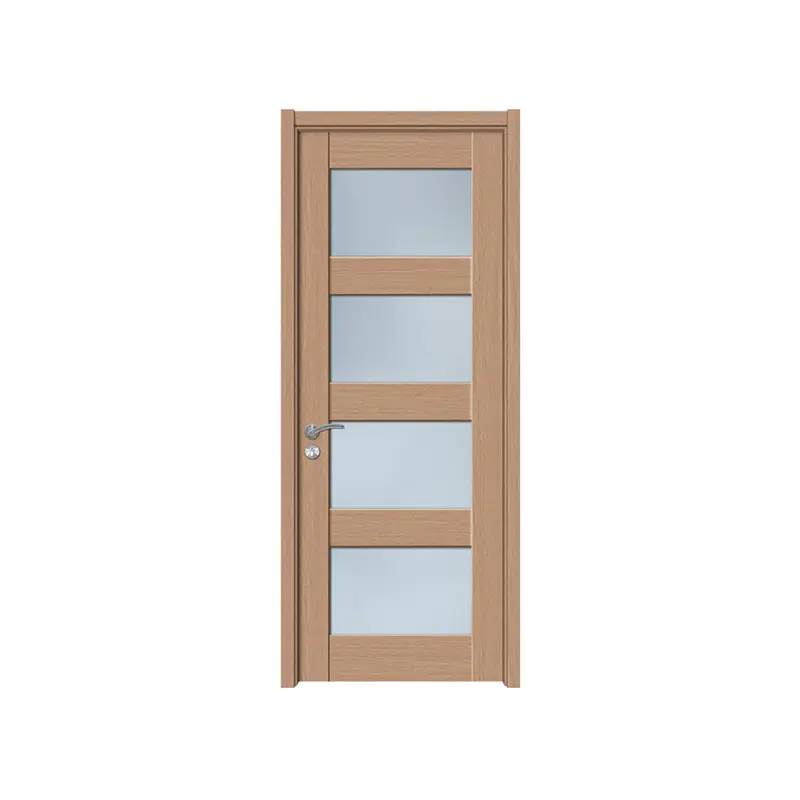
What Are MDF Doors for Bathroom?
MDF stands for medium-density fiberboard. It's made by breaking down wood fibers and pressing them together with resin, which gives the panel a flat, grain-free surface compared to natural wood.
That flatness is the reason paint sits so evenly on it, and why manufacturers can cut clean panel details into it without the material splitting the way solid wood sometimes does along its grain.
A bathroom door has to cover a few jobs at once:
| What the door needs to do | Why it matters day to day |
|---|---|
| Keep the space private | Basic function of any interior door |
| Fit the room's look | Sits right next to the vanity, tile, and fixtures |
| Open and close smoothly | Used multiple times daily by every household member |
| Take a finish that holds up | Bathroom air carries steam and splashed water |
Whichever material a household picks affects both how the door looks after a year of use and how much upkeep it asks for.
Why Does Door Selection Matter in Bathroom Design?
Bathrooms are used throughout the day, from getting ready before work to cooling down after exercise or making a late-night visit for a drink. This frequent activity puts a door through many open-and-close movements over time compared with doors in other areas of a home.
A door that clashes with the tile color or hardware finish can throw off a room that's otherwise carefully put together. On the other hand, a door chosen with the rest of the space in mind tends to disappear into the design instead of pulling attention away from it.
Door choice touches on things like:
- How well the color matches nearby fixtures
- Whether the room feels calm or busy
- How large or cramped the space seems
- Whether the bathroom reads as finished or half-done
A door might look like a minor detail on a floor plan, but it sits right at the point where two rooms meet, so it carries more visual weight than its size suggests.
How Do MDF Doors for Bathroom Enhance Interior Style?
MDF gets chosen partly because its surface takes different treatments without much fuss. A flat panel can go under a matte paint for a quiet, modern look, or take a raised-panel profile for something closer to a traditional style.
Different households lean toward different directions with the same base material:
| Interior direction | What the door tends to look like |
|---|---|
| Modern bathrooms | Flat panels, muted paint colors |
| Minimal spaces | Smooth surfaces, few visible seams |
| Traditional interiors | Raised panel detail, warmer tones |
| Mixed or transitional homes | Simple shapes with a slightly textured finish |
Because the panel starts out so uniform, it can go in several directions depending on what the rest of the bathroom already looks like.
How Can MDF Doors Help Create a More Organized Space?
A bathroom often crowds a washing area, a storage cabinet, and sometimes a laundry hookup into a tight footprint. The door marks where that crowded space ends and the hallway or bedroom begins.
Picking a door that matches the trim and wall color nearby helps that boundary feel intentional instead of like an afterthought.
Some of the practical upside includes:
- A hallway that reads as one continuous space instead of a patchwork
- Less visual clutter where the bathroom meets the rest of the house
- A layout that feels planned rather than pieced together over time
- A calmer transition between a private space and a shared one
None of this changes the plumbing or the square footage, but it changes how settled the room feels once someone walks past it.
How Does Surface Design Affect Bathroom Appearance?
The door surface sits under whatever light the bathroom gets, whether that's a small window, a vanity light, or an overhead fixture running at full brightness during a morning routine.
MDF gives a flat starting point, and what goes on top of it shifts the room's feel more than people usually expect from a single door.
| Surface choice | What changes in the room |
|---|---|
| Paint color | Sets the general mood of the space |
| Texture or grain print | Adds a bit of visual depth |
| Panel detailing | Gives the door a distinct character |
| Plain, flat finish | Keeps the room looking uncluttered |
A door repainted from a dark color to something lighter can make a small bathroom feel less closed in, even without touching anything else in the room.
How Do MDF Doors for Bathroom Support Modern Renovation Needs?
Renovation projects usually run on a mix of budget and timeline. Homeowners want a door that fits the new look without tearing out the frame or resizing the opening.
MDF works into this kind of project because it can be trimmed, painted, or swapped without requiring a full redo of the surrounding wall.
Renovation situations where this comes up:
- Matching a door to a vanity or tile that's already been picked out
- Swapping an old, warped door without changing the frame
- Keeping a consistent look across bathrooms on different floors
- Refreshing a dated bathroom without a full gut renovation
A door that slots into an existing opening saves both time and money compared to reworking the frame from scratch.
What Factors Should Be Considered When Choosing MDF Bathroom Doors?
Every bathroom has its own quirks. A basement bathroom with poor ventilation asks for different handling than a guest bathroom near a sunny window.
Things worth thinking through before buying:
| Point to consider | Why it comes up |
|---|---|
| How the bathroom is laid out | Affects which door swing and size work |
| The rest of the room's style | Keeps the door from clashing with tile or trim |
| How often the room gets used | Heavier use means more wear on hinges and edges |
| How much upkeep the household is willing to do | Some finishes need more attention than others |
Walking through these questions before ordering a door tends to prevent the awkward situation of a door that looks right in a showroom but doesn't fit the actual room.
How Can MDF Doors Improve the Connection Between Rooms?
Walk from a bedroom into a bathroom, and the door is the one object bridging both spaces. Its color and shape either carry the eye smoothly from one room to the next or create a visible break.
A door picked with that transition in mind tends to blend rather than interrupt.
A few examples of how this plays out:
- A flat, painted MDF door can sit quietly next to a modern bedroom without pulling attention
- A door with panel detailing can echo an older home's trim work and moldings
- A door painted to match nearby walls can make the hallway feel longer and less broken up
The door stops being just a barrier and starts working as part of how the house reads as a whole.
How Does Practical Maintenance Influence Bathroom Door Choices?
Anyone who's wiped toothpaste splatter off a bathroom door knows maintenance isn't an abstract concern. Doors near a sink or shower take on water and cleaning products more often than doors anywhere else in a house.
Regular upkeep for a bathroom door usually comes down to:
- Wiping down the surface after it gets splashed
- Checking the bottom edge occasionally for swelling
- Keeping an eye on hinges and hardware for wear
- Avoiding harsh scrubbing that can wear through a painted finish
A well-sealed MDF door with a solid paint job holds up fine under this kind of routine, as long as standing water near the base doesn't sit for long stretches.
How Are MDF Doors for Bathroom Changing Modern Interior Concepts?
Bathrooms have shifted from purely functional rooms into spaces people actually think about designing. A guest bathroom might now get as much attention as a living room wall. MDF Doors for Bathroom fit into that shift because they adapt to a range of looks without demanding a complicated installation or a big jump in cost. Their flexibility across styles, room layouts, and personal taste keeps them a common choice for households working through a bathroom update, whether that's a full renovation or just swapping one tired-looking door for something that fits the room better.
Interested in cooperation or have questions?


 +86-13857003056
 No. 27 Lianhuashan Avenue, Jiangshan Economic Development, Jiangshan, Quzhou, Zhejiang, China
Copyright © Zhejiang Kings Home Decor Co., Ltd. All Rights Reserved.

Interior Wood Door Manufacturer