

 English
 русский
 Français
 Español
 عربى
عربىHow to Install MDF PVC Doors in Interior Spaces Properly
Interior door installation looks straightforward until something goes wrong six months later — a door that drags on the floor, a frame that has shifted, edges that have swollen from moisture exposure. For anyone working with MDF PVC Doors, these outcomes are largely preventable, but they depend on getting the installation process right from the start. The laminated PVC surface that protects the MDF core is only as durable as the installation underneath it. Gaps in sealing, an unlevel frame, or the wrong hardware placement create conditions where even a quality door will underperform. The steps and considerations outlined here address both the general installation process and the specific factors that apply to this material in different interior environments.
Understanding What MDF PVC Doors Actually Are
Why the Material Composition Affects How You Install Them
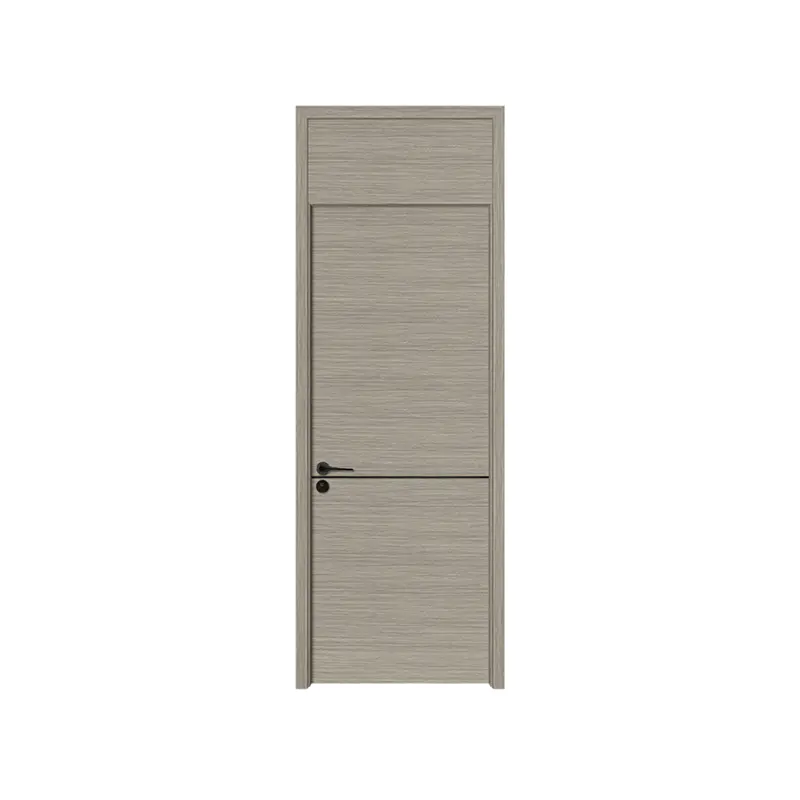
MDF PVC Doors combine a medium-density fiberboard core with a PVC laminate surface applied under heat and pressure. The fiberboard provides structural body and a uniform surface for the laminate to bond to. The PVC layer handles aesthetics and provides a degree of moisture resistance that raw MDF does not have on its own.
This construction creates a door that behaves differently from a solid timber door or a hollow-core door in a few important ways:
- Weight distribution is relatively uniform across the door's face — no grain irregularities or density variations that require compensation
- The edges are the vulnerability. The PVC surface wraps the face and often the edges, but cut edges — particularly at the bottom — expose raw MDF that absorbs moisture readily
- The material does not like prolonged moisture exposure at unsealed points, even with the PVC surface intact
Understanding these properties helps explain why certain steps in the installation process matter more than they would with other door types. Edge sealing is not optional. Frame alignment is not a finishing detail — it determines whether the door closes cleanly for years.
Preparation: Measuring and Checking the Door Opening
Getting the Opening Right Before the Door Arrives on Site
Measurement errors caught before installation are recoverable. Errors discovered after a door is hung are expensive. Standard practice for interior door installation requires checking the opening in multiple ways before committing to a door size.
Steps for opening preparation:
- Measure the rough opening height and width at multiple points. Walls and floors are rarely perfectly uniform. Measure the width at the top, middle, and bottom of the opening, and the height on both sides. Work with the smallest of the three width measurements and the smallest height measurement.
- Check the floor for level. A floor that slopes creates a gap on one side of the door bottom. This is fixable with threshold strips or by adjusting hinge placement, but it needs to be known before installation begins.
- Check the wall for plumb. Use a spirit level on both sides of the opening. A wall that is out of plumb affects how the door frame sits and how the door hangs once installed.
- Confirm the opening depth matches the frame thickness. The door frame needs to sit flush with both wall faces — or extend to allow for a reveal, depending on the design intent.
For Wholesale MDF Door orders in commercial or residential construction projects, having an accurate site survey before specifying door sizes prevents the delays and costs associated with doors that do not fit the openings they were ordered for.
Installing the Door Frame
A Level Frame Is the Foundation Everything Else Depends On
The door frame carries the door's weight and determines how cleanly it opens, closes, and sits in the opening. Getting the frame installation right takes more time than rushing it, but the time investment pays back immediately in reduced adjustment work and better long-term performance.
Frame installation procedure:
- Insert the frame assembly into the opening and check that it sits plumb on both sides and level across the top using a spirit level. Adjust with timber packers until the readings are correct on all axes.
- Fix the frame temporarily — do not fully secure it yet. Recheck plumb and level after the temporary fixings are in, as driving fixings into the wall can pull the frame slightly.
- Check the frame reveals on both wall faces. The frame should sit consistently relative to both faces of the wall, or at the specified reveal depth if a projecting frame is intended.
- Fill the gap between the frame and the rough opening using expanding foam filler or solid packers, depending on the gap size. Expanding foam is effective for smaller gaps but needs to be contained — overfilling can push the frame out of alignment as it cures.
- Make final alignment checks before the foam or fixings fully set. Once the frame is locked in place, adjustments require significant rework.
For Custom MDF Doors ordered to non-standard dimensions, the frame preparation is especially important. A custom door specified to fit a particular opening should fit with appropriate clearance — typically a few millimeters on each side — not flush against the frame with no movement allowance.
Hanging the Door: Hinge Placement and Alignment
Where Hinges Go Affects How the Door Performs for Its Full Service Life
Hinge placement is one of the more technical aspects of door hanging, and it is also where many installation errors originate. Hinges positioned too close to the edge of the door can cause the wood to split or the laminate to lift. Hinges not aligned vertically cause the door to bind or develop an uneven gap around its perimeter.
Hinge installation steps:
- Mark hinge positions on the door edge and the frame at the same time, using the door as a template against the frame to ensure alignment. Standard positions place one hinge near the top, one near the bottom, and one in the center for taller doors.
- Rout or chisel hinge recesses so that the hinge leaf sits flush with the door edge and frame surface. A hinge that sits proud of the surface prevents the door from closing fully.
- Attach the hinges to the door, then hang the door on the frame hinges to check alignment before fully securing the frame-side fixings.
- Check the clearance gap around the door perimeter. An even gap on all sides indicates correct alignment. A gap that is tight at one point and wide at another indicates the frame or door is out of plumb and needs adjustment.
- Use screws of appropriate length and gauge for MDF. Screws that are too long can blow through the back face. Screws that are too short do not hold reliably under the repeated stress of door opening and closing.
Sealing MDF Edges: The Step That Determines Long-Term Performance
Why Edge Treatment Cannot Be Skipped on MDF Doors
Raw MDF edges — particularly the bottom edge after any site trimming — absorb moisture directly and swell permanently. Once swelling occurs, it cannot be reversed. The door will not close properly, and the PVC surface may begin to lift at the affected edge. Edge sealing is not a cosmetic step; it is a structural protection measure.
Edge sealing procedure:
- Apply PVC edge banding or matching edge tape to any cut edges immediately after trimming. Use a heat gun to activate adhesive-backed tape, pressing firmly along the length to ensure full contact.
- For bottom edges, apply two coats of a solvent-based sealant or wood primer across the full width before hanging the door. Allow full drying between coats.
- For side edges, the factory edge banding is usually intact and does not require treatment unless it has been damaged during transit or handling. Inspect carefully and address any lifting at the edge band before installation.
- After installation, apply a flexible silicone sealant or appropriate floor seal at the point where the door bottom meets the floor threshold, particularly in bathroom installations.
In bathroom and high-humidity spaces, this step is not just important — it is the difference between a door that lasts and one that fails within a year or two.
Installing MDF Doors in Bathrooms: Specific Requirements
MDF Doors for Bathroom Use Need a Different Level of Preparation
Bathrooms present a particular challenge for any interior door material, and MDF requires specific measures to handle the humidity levels and occasional moisture exposure that bathroom environments generate. A standard interior door installation approach is not sufficient here.
Key bathroom-specific installation requirements:
- Ensure adequate clearance at the floor. A gap between the door bottom and the floor allows air circulation and prevents the door from sitting in standing water after bathing. Use appropriate threshold strips to cover this gap without blocking airflow.
- Seal all edges comprehensively before installation — including the top edge, which is often overlooked. Steam rises, and the top edge of a bathroom door is exposed to it on every shower.
- Use stainless steel or coated hinges rather than standard steel hardware. Standard steel hinges rust in bathroom humidity and stain the door surface around the hinge area.
- Ensure the bathroom has ventilation. A well-installed door in a bathroom with no extractor fan will still be exposed to condensation levels that no door material handles indefinitely without proper airflow management.
- Check the door's moisture resistance rating before specifying it for bathroom use. Not all MDF PVC door products are manufactured to the same moisture resistance standard. Products specified for high-humidity areas should be confirmed as suitable by the manufacturer.
MDF Fire Door Installation: Certification and Compliance Requirements
What Changes When Installing a Rated Fire Door?
MDF Fire Door installation involves requirements that go beyond standard interior door fitting. Fire-rated doors are tested as complete assemblies — the door, the frame, the hardware, and the intumescent strips — and their fire performance depends on all elements being installed correctly and without substitution.
Installation requirements for fire-rated doors:
- Use only the hardware specified for the fire rating. Standard hinges cannot replace fire-rated hinges in a certified assembly. The same applies to closers, latches, and any other hardware specified as part of the rating.
- Install intumescent seal strips in the door edge or frame, as specified. These strips expand when exposed to heat, sealing the gap between door and frame to restrict fire spread. They must be continuous with no gaps.
- Do not trim a fire door beyond the manufacturer's specified tolerance. Trimming removes material from the door edge where the fire resistance is often concentrated. Exceeding the allowed trim removes the certification.
- Fit self-closing hardware. Certified fire doors must be self-closing to meet their rating. A fire door propped open or without a closer is a compliance failure.
- Check local building code requirements for fire door installation in the specific application — residential fire doors, commercial corridor doors, and stairwell doors may each have different requirements.
MDF Door Vs Solid Core: Installation Differences Worth Knowing
Does Switching Door Types Require Changing Your Installation Approach?
The MDF Door Vs Solid Core comparison matters at the installation stage because the two materials behave differently under the same handling and mounting conditions.
| Factor | MDF PVC Door | Solid Core Door |
|---|---|---|
| Weight | Lighter, easier to handle | Heavier, requires more support during hanging |
| Edge sensitivity | High — raw edges must be sealed | Lower — solid material throughout |
| Hinge requirements | Standard gauge appropriate for lighter door | Heavier gauge hinges often required |
| Trimming tolerance | Limited — check manufacturer specification | Generally allows more trimming |
| Moisture at edges | Sealing is essential | More forgiving but still not waterproof |
| Frame fit tolerance | Consistent — uniform material | May vary slightly based on timber content |
Understanding these differences prevents installation errors that come from treating MDF as a substitute for solid timber without adjusting technique. The lighter weight makes handling easier, but the edge sensitivity requires more deliberate sealing work than many solid core doors demand.
Common Installation Mistakes and How to Avoid Them
What Goes Wrong When the Process Is Rushed or Misinformed?
Several installation errors show up repeatedly in MDF door failure cases. They are worth stating plainly because each is avoidable:
- Leaving the bottom edge unsealed after trimming — causes swelling within months, especially in bathrooms or ground-floor spaces with humidity variation
- Installing without checking frame plumb — causes the door to drift open or closed on its own, and creates uneven wear on hinges over time
- Using the wrong screw length for MDF — too-long screws blow out the back face; too-short screws pull out under repeated use
- Applying expanding foam without packing the frame — the foam's pressure can push a frame off plumb as it cures.
- Substituting non-rated hardware on fire doors — voids the certification and creates a compliance and liability issue
- Ignoring floor clearance in bathrooms — traps moisture under the door and accelerates edge damage from below
Many of these errors are not complex to avoid. They require attention to preparation steps, not advanced technical skill.
Getting Installation Right Protects the Door and the Investment Behind It
A door that is installed correctly in a properly prepared opening, with sealed edges and appropriate hardware for the space, will perform reliably for many years without adjustment issues or moisture-related failure. One that is hung in an unlevel frame with unsealed bottom edges will cause problems within a season, regardless of how well the door itself was manufactured. The installation is not a lesser step — it is where the quality of the product either gets realized or undermined.
For contractors, interior fit-out teams, or procurement professionals sourcing doors at volume, the quality of the product and the quality of the installation process are inseparable parts of the outcome. Specifying doors that are manufactured to appropriate moisture resistance, edge protection, and — where required — fire rating standards is the foundation. Installing them with the level of care the material requires is what makes that specification deliver on its intent. Zhejiang Kings Home Decor Co., Ltd. manufactures a range of MDF PVC door products including standard interior doors, bathroom-grade options, and fire-rated configurations, with attention to the edge treatment and surface quality that correct installation depends on. If you are evaluating door specifications for a project or exploring wholesale sourcing options, reaching out to discuss product range and technical requirements is a practical next step.
Interested in cooperation or have questions?


 +86-13857003056
 No. 27 Lianhuashan Avenue, Jiangshan Economic Development, Jiangshan, Quzhou, Zhejiang, China
Copyright © Zhejiang Kings Home Decor Co., Ltd. All Rights Reserved.

Interior Wood Door Manufacturer