

 English
 русский
 Français
 Español
 عربى
عربىMDF PVC Doors for Rental Properties: A Cost-Effective Guide
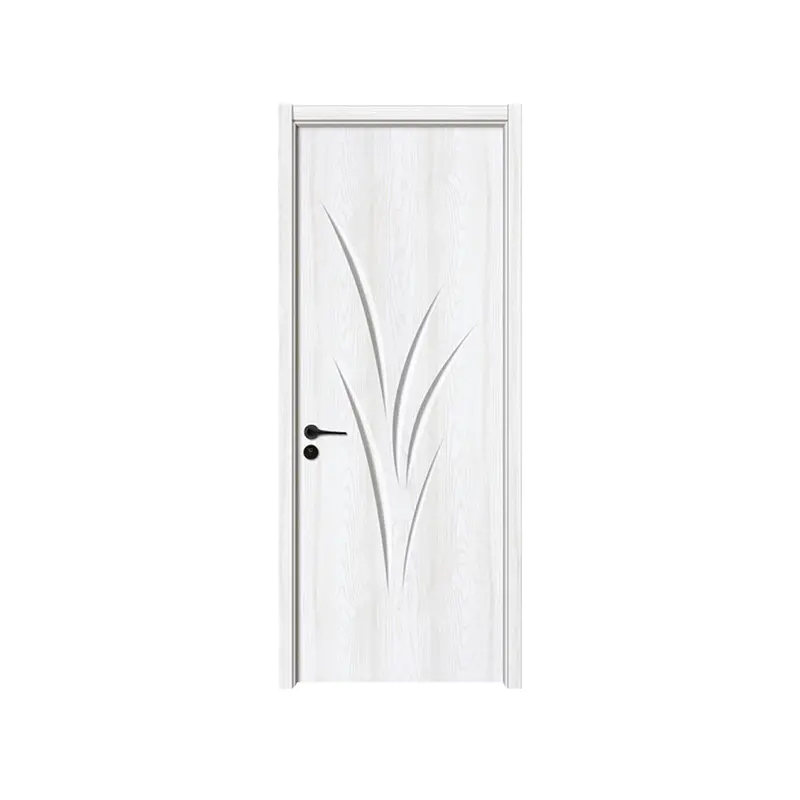
Anyone who has managed a handful of rental units knows the story by heart: a tenant moves out, and the door to the bathroom looks like it survived a small storm. Swollen edges, peeling veneer, a hinge that no longer sits flush. This is exactly why so many landlords and contractors end up searching for MDF PVC Doors instead of sticking with whatever the original builder installed. The math is simple enough — doors that resist moisture and knock around, at a price that doesn't make you wince every time a lease turns over.
Why Rental Doors Wear Out So Fast
Rental units get a kind of wear that owner-occupied homes rarely see. Doors get slammed. Bathroom doors sit in humid air for hours after every shower, day after day, with nobody around to crack a window. Front doors take weather on one side and dry indoor air on the other, which pulls at the material from both directions.
Solid wood doors were never really built for that kind of punishment, honestly. They swell, they crack along the grain, and once a door warps even slightly it stops closing properly — which then becomes a maintenance call, a missed rent day, sometimes a tenant complaint that escalates further than it needs to.
That's the backdrop against which cost-effective door materials start to make sense. It isn't about cutting corners. It's about picking a material that matches the actual conditions a rental door lives in.
Is Solid Core Really Worth the Extra Weight?
This question comes up constantly among property managers, and the honest answer is: it depends on what you're solving for.
Solid core doors bring a certain heft and sound dampening that some buyers still associate with quality. But weight isn't free — heavier doors put more strain on hinges, cost more to ship, and take longer to install across a whole building. Comparing MDF Door Vs Solid Core, the difference usually comes down to three things:
- Moisture behavior — MDF with a proper PVC wrap resists swelling far better than raw solid wood
- Installation labor — lighter panels go up faster across multiple units
- Long-term finish — PVC surfaces don't need repainting the way solid wood eventually does
None of this means solid core is a poor choice everywhere. In quiet, low-turnover buildings, it can still make sense. But for a property with regular tenant changeover, the practical edge tends to sit with engineered panels.
Moisture Changes Everything in Bathrooms
Bathroom doors take the worst of it, and it isn't close. Steam settles into the lower rail, condensation drips onto the frame, and over a year that moisture cycle repeats itself hundreds of times.
MDF Doors for Bathroom use is one of the clearest cases where material choice actually changes the maintenance calendar. A PVC-faced MDF core seals out surface moisture instead of absorbing it, so the panel doesn't swell along the bottom edge the way untreated wood composites do.
A few things worth keeping in mind when specifying bathroom doors for rentals:
- Check that the PVC facing wraps the full edge, not just the front and back panels
- Ask whether the core density is suited for humid rooms specifically, not a general-purpose panel
- Confirm the hardware (hinges, handles) is rated for damp environments too — the door isn't the only part exposed
Skipping any one of these steps tends to show up later as a warranty complaint, so it's worth the extra question during sourcing.
What About Fire Ratings and Exterior Exposure?
Not every rental door faces the same risk profile, and this is where buyers sometimes overcomplicate things.
Interior bathroom and bedroom doors generally don't need fire ratings. But shared corridor doors, stairwell doors, or anything separating a unit from a common area often does, depending on local building codes. An MDF Fire Door core can meet these requirements while maintaining a relatively light weight and a cost profile that keeps MDF an appealing option at the outset.
Exterior applications are a different animal altogether. MDF External Doors and MDF Front Door units need a facing that can handle direct sun and rain, not just indoor humidity. PVC wrapping helps here too, but the core density and edge sealing matter more on an exterior unit than an interior one — sun exposure alone can degrade a poorly sealed edge faster than moisture would indoors.
So the honest answer is: fire rating and exterior durability aren't universal requirements, they're situational ones. Matching the spec to the actual door location saves money without sacrificing anything the location doesn't actually need.
Matching the Door to the Room
Pulling all of this together, here's a rough breakdown of how door type tends to line up with room function in a rental setting.
| Room / Location | Main Concern | Suggested Approach |
|---|---|---|
| Bathroom | Moisture and repeated steam exposure | PVC-faced MDF with fully sealed edges |
| Kitchen | High humidity, grease, and frequent cleaning | PVC-faced MDF with a durable, wipeable surface |
| Bedroom / Interior | Cost efficiency, noise reduction, and everyday wear | Standard MDF panel |
| Corridor / Shared Access | Compliance with fire safety regulations | MDF with a fire-rated core |
| Front / Exterior | Weather exposure and environmental durability | Sealed PVC-wrapped MDF with weather-rated hardware |
This isn't meant as a strict rule for every property — climate, building code, and tenant type all shift the picture somewhat. But it's a reasonable starting point for anyone specifying doors across a mixed-use building or a portfolio of units.
Can Custom Sizing Actually Save Money Over Time?
It sounds counterintuitive at first. Custom sizing usually implies added cost, right? Not always, and especially not in older rental stock.
Older buildings frequently have door openings that don't match modern standard sizes. Forcing a standard door into a slightly mismatched frame means extra trimming, shimming, or in worse cases, a gap that lets moisture and sound through. Custom MDF Doors solve this by matching the opening directly, which cuts down on installation labor and callbacks after the fact.
There's also a consistency argument here. A property with a dozen units and a dozen slightly different door sizes ends up needing a dozen different spare parts on hand. Standardizing through custom orders — even if each door is a slightly different size — can still mean uniform hardware, uniform finish, and a much simpler maintenance inventory down the line.
Sourcing in Bulk Without the Headache
For anyone managing more than a handful of doors, one-off retail purchasing stops making sense pretty quickly. Buying a Wholesale MDF Door order instead of individual units usually brings down the per-unit cost meaningfully, and it also means every door in the building matches — same finish, same hardware prep, same fire rating where needed.
A few practical points worth checking before placing a bulk order:
- Ask for a sample panel before committing to a full order, so the finish and edge sealing can be checked directly
- Confirm production and shipping times in relation to the renovation or turnover schedule, as bulk orders may require more time compared with single-unit purchases.
- Clarify whether PVC MDF Door options come pre-hung or as slabs only, since that changes on-site labor significantly
- Request consistent batch coloring if multiple units will be visible from the same hallway or shared space
Bulk sourcing tends to work more effectively when it is scheduled ahead of a renovation cycle rather than handled in response to tenant complaints. Doors require time for manufacturing and shipping, so factoring that production and shipping window into a renovation schedule helps avoid rushed ordering at the final stage.
Bringing It Together
Choosing doors for a rental property really comes down to matching material to condition — humid rooms need sealed, moisture-resistant panels, shared corridors need fire-rated cores, and everyday interior doors mostly need to be durable enough to survive tenant turnover without constant repair. None of this requires overspending on premium solid wood across the board, nor does it mean settling for something flimsy just to save a bit upfront. MDF PVC Doors sit in a practical middle ground for a lot of these situations, offering resistance to moisture and daily wear at a price point that scales reasonably across multi-unit buildings. For property owners, contractors, or distributors looking to source these panels in volume, working with a manufacturer that understands both the technical side and the practical logistics of bulk orders makes the process considerably smoother. Zhejiang Kings Home Decor Co., Ltd. works with buyers on exactly this kind of project, from bathroom-specific panels to full building door packages, and can walk through sizing, finish, and order timelines for anyone ready to move a rental renovation forward.
Interested in cooperation or have questions?


 +86-13857003056
 No. 27 Lianhuashan Avenue, Jiangshan Economic Development, Jiangshan, Quzhou, Zhejiang, China
Copyright © Zhejiang Kings Home Decor Co., Ltd. All Rights Reserved.

Interior Wood Door Manufacturer