

 English
 русский
 Français
 Español
 عربى
عربىMDF PVC Doors vs Painted Wood: Key Differences Explained
A door specification error often escapes notice at handover. It appears months afterward — paint chipping at the hinge edge in a bathroom that stays humid through much of the year, or a budget laminate panel whose finish does not match once the rest of the unit has been installed. For developers, contractors, and procurement teams sourcing doors across multiple units or project phases, the choice between painted finishes and laminated surfaces carries real cost and durability weight that becomes apparent only once the building is in use. MDF PVC Doors sit at the center of this decision for a large share of modern construction and renovation work, and understanding how they compare against painted wood alternatives shapes both the budget conversation and the long-term maintenance expectation that follows installation.
What Are Painted Wood Doors?
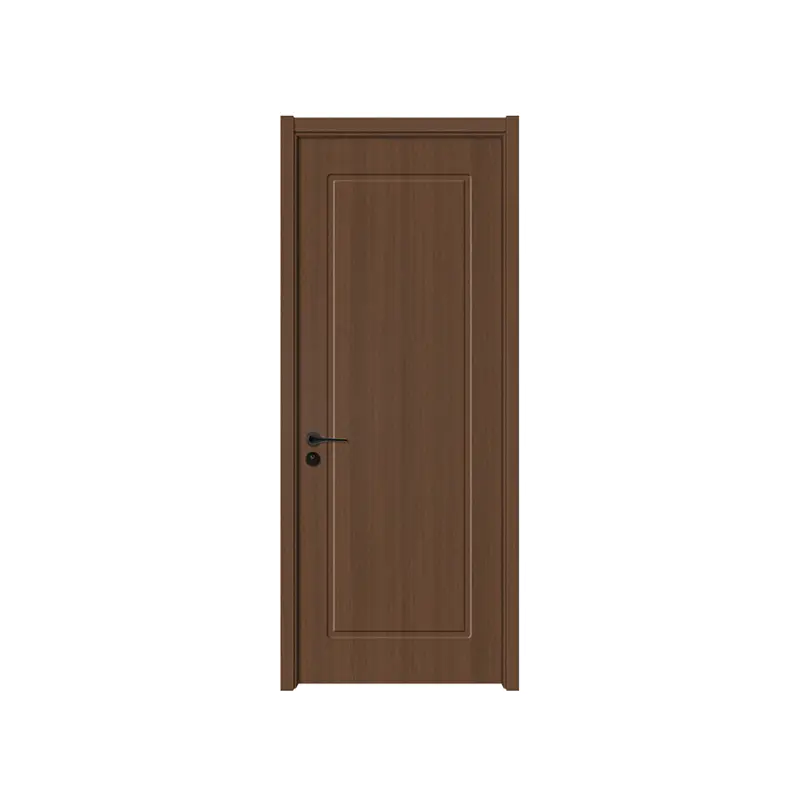
Painted wood doors generally start with an MDF or engineered wood core, finished through several layers of paint that are sanded between each application and polished to a smooth, even surface. The whole approach is built around achieving visual refinement rather than minimizing cost or production time.
Structure and Materials
The base substrate is typically MDF or a comparable engineered core, selected for its dimensional stability and how cleanly it machines. A primer coat goes down first, followed by color layers and a protective topcoat. Sanding happens between each layer — this is the step that actually produces the glass-smooth surface these doors are recognized for, and skipping it is usually where lower-quality painted doors fall short.
Key Characteristics
A few things stand out about this finishing approach:
- A glossy or matte appearance that reads as premium across residential and hospitality settings alike
- Uniform color with no visible seam lines or texture variation across the door face
- Color matching flexibility — essentially any shade can be reproduced, which gives designers more latitude than a fixed laminate pattern library typically allows
Limitations Worth Knowing
The same surface that makes painted doors attractive is also their weak point. Paint chips and scratches more readily than a laminated film, particularly at corners and contact edges that take repeated knocks over time. Maintenance is also more demanding — occasional touch-ups, periodic refinishing in heavy-traffic zones, and careful cleaning to avoid abrading the topcoat. And the labor involved in multi-stage painting puts these doors at a noticeably different price point than their laminated counterparts.
What Are PVC Laminated Doors?
PVC laminated doors take a different manufacturing path entirely. Rather than building up a finish coat by coat, a decorative PVC film gets bonded onto an MDF or composite core under heat and pressure in a continuous process.
Structure and Materials
The core material is usually MDF, chosen for broadly the same reasons as in painted doors — stability, a smooth surface to laminate onto, and predictable machining behavior. The PVC film itself comes pre-printed with wood grain textures, decorative patterns, or solid colors, then gets laminated onto the core face. The lamination process underpins what many buyers commonly mean when they refer to a PVC MDF door.
Key Characteristics
The laminated approach brings a different set of strengths to the table:
- Strong moisture resistance, since the continuous PVC film creates a barrier across the surface that resists water absorption considerably better than painted wood
- A surface layer that holds up to scuffing and everyday wear noticeably better than multi-coat paint
- More cost-effective production, since lamination moves faster and requires less skilled labor than multi-stage painting and sanding
Limitations to Consider
Laminated doors generally do not reach the depth of finish that a quality paint job produces — the surface reads as decorative rather than as a genuinely high-end painted look, which matters in luxury residential or hospitality work where visual refinement carries weight. Lower-grade PVC films can also be sensitive to sustained heat, occasionally showing edge lifting or discoloration in poorly ventilated or unusually warm installation conditions.
Painted Wood Doors vs PVC Laminated Doors: Key Differences
Placing the two side by side makes the trade-offs easier to see at a glance.
| Feature | Painted Wood Doors | PVC Laminated Doors |
|---|---|---|
| Appearance | Premium glossy or matte finish | Decorative film surface with pattern options |
| Cost | Higher, reflecting multi-stage finishing labor | More affordable across comparable volume |
| Moisture resistance | Moderate | High |
| Durability | Moderate — vulnerable to chipping | High — resists scuffs and wear |
| Maintenance | Requires care and occasional touch-up | Easy to clean and maintain |
| Customization | Wide color range through paint matching | Pattern and texture library dependent |
| Best use case | Luxury interiors, design-led projects | Residential and commercial volume projects |
Looking across the comparison, the pattern is fairly consistent: painted doors win on visual depth and customization range, while laminated doors win on durability, moisture handling, and cost efficiency once volume enters the picture.
Which Door Type Suits Different Project Applications?
Project type and installation environment usually do more work in shaping the right choice than personal taste alone — though taste still matters where budget allows for it.
Residential Interiors
For general residential interior doors — bedrooms, hallways, living spaces — painted wood doors get specified where the project budget supports premium finishing and where the design brief calls for a custom color palette running consistently through the home.
Bathrooms and Kitchens
Wet, humid environments are exactly where PVC laminated doors earn their place. MDF doors for bathroom applications benefit directly from the moisture barrier that lamination provides; painted finishes in these zones are simply more prone to swelling and peeling under sustained humidity, regardless of paint quality.
Commercial Projects
Offices, retail spaces, and hospitality common areas tend to favor PVC MDF doors because of the volume involved and the need for surfaces that tolerate heavy foot traffic and frequent cleaning without constant attention.
Luxury Villas and High-End Residential
Where budget is less of a constraint and the brief calls for a distinctive, premium look throughout, painted wood doors remain the more typical specification. The color matching range and finish quality fit naturally with the broader design language found in high-end residential projects.
Budget-Conscious Housing Developments
Large housing developments with tight per-unit budgets tend to lean toward PVC laminated doors. The cost efficiency at scale, paired with adequate durability for standard residential use, makes laminated doors the more practical call across hundreds of units.
How Does Cost Compare Between the Two Door Types?
Cost differences between painted and laminated doors come from several factors layered together, not just the raw material price tag.
Material input for painted doors includes the substrate plus several coats of primer, color, and topcoat — each one adding to material expenditure. Laminated doors rely on a single decorative film layer, which keeps material cost noticeably lower.
Production complexity diverges quite a bit between the two. Painted finishes need multiple application and curing cycles, with sanding between coats to hold surface quality. That stretches out production time and adds labor cost. PVC lamination is a faster, more continuous process that scales more efficiently for larger order volumes.
Finishing labor is concentrated heavily in painted door production — skilled finishing work commands higher rates than the more automated lamination process used for PVC doors.
Maintenance cost across the service life of the door shifts the calculation somewhat further out. Painted doors can carry a higher ongoing maintenance cost from touch-ups and periodic refinishing, especially in high-traffic zones, while laminated doors typically need less intervention once correctly installed.
For wholesale MDF door buyers planning project-wide volumes, these cost factors compound meaningfully — a small per-unit difference becomes significant once multiplied across hundreds or thousands of doors.
Which Door Type Performs Better for Bulk Project Procurement?
Bulk procurement decisions weigh differently than single-unit residential choices, and the priorities of different stakeholders on a construction project often pull in different directions.
Developers managing project-wide cost control generally favor PVC laminated doors for the combination of durability and lower per-unit cost across large volumes — particularly in housing developments where consistent quality across many units matters more than individual customization.
Designers working on showcase units or design-led spaces tend to push for painted wood doors because of the aesthetic flexibility, even within a broader project that otherwise specifies laminated doors for standard units throughout.
Contractors managing the balance between client expectations and project budget often end up specifying a mix — painted doors in feature areas or model units, laminated doors across the bulk of standard units. This hybrid approach shows up often enough in mid-to-large residential developments that custom MDF doors and standard laminated ranges frequently appear side by side in the same project specification document.
MDF Door Variations Worth Understanding
Beyond the painted-versus-laminated distinction, several specialized MDF door categories address requirements that general interior doors simply do not cover.
MDF Fire Door
Fire-rated MDF doors use core materials and edge sealing designed to meet fire safety performance standards for a defined duration. These get specified for stairwells, corridors, and any location where building codes mandate fire-resistant door assemblies. Core density and edge treatment differ from standard interior MDF doors specifically to achieve this performance characteristic.
MDF Doors for Bathroom
As covered earlier, moisture resistance is the defining requirement here. Beyond PVC lamination itself, some bathroom-specific MDF doors incorporate moisture-resistant core treatments or specialized edge sealing to prevent water ingress at vulnerable points such as the door bottom and panel joints.
MDF Door vs Solid Core Door
This comparison comes up regularly in procurement discussions. Solid core doors use a denser, heavier core construction that delivers improved sound insulation and a more substantial feel underhand, generally at a higher cost. MDF doors with PVC or paint finishes stay lighter and more cost-efficient, and they cover the vast majority of standard residential and commercial applications where acoustic performance is not the deciding specification factor.
Choosing a Reliable MDF PVC Doors Manufacturer
For buyers moving past material selection into actual sourcing, manufacturer capability becomes the factor that determines whether the chosen specification turns into consistent, reliable delivered product or a string of quality complaints.
Capabilities worth evaluating before committing:
- Manufacturing capability and equipment — does the facility have the lamination and finishing technology to hold consistent surface quality across large order volumes?
- Surface finishing technology — for painted doors, what does the paint application and curing process look like, and how is batch-to-batch consistency maintained?
- PVC lamination quality — film adhesion, edge sealing, and resistance to lifting or peeling over time are quality markers worth checking through physical samples rather than spec sheets
- Custom design options — for buyers needing custom MDF doors with specific dimensions, panel designs, or color matching, how flexible is the manufacturer, and what additional time does customization require?
- Bulk production capacity — for wholesale MDF door orders, can the facility actually deliver consistent quality at the volume and timeline the project demands?
- Quality control systems — documented inspection processes that catch dimensional, finish, or lamination defects before shipment protect against expensive field problems discovered after installation
Why Source MDF PVC Doors From China?
China's door manufacturing sector has built substantial capability across both painted finish and PVC lamination production, supported by a mature supply chain covering MDF substrate, decorative films, and paint systems.
The practical advantages for international buyers tend to include:
- Cost efficiency across both door categories, reflecting scale and integrated access to raw material supply chains
- A flexible, established supply chain that supports standard product lines and custom specifications without extended turnaround times
- Customization range covering dimensions, surface patterns, color matching, and hardware preparation
- Established export experience, including documentation and packaging suited to international shipping schedules and project timelines
For developers and distributors sourcing door volumes across multiple projects or markets, that combination of cost and flexibility tends to make China-based manufacturing a practical foundation for an ongoing supply relationship rather than a single transactional order.
Practical Questions Buyers Often Ask
What Is the Actual Difference Between Painted Wood Doors and PVC Laminated Doors?
Painted doors use several layers of applied paint over an MDF or wood core to reach a refined, custom-color finish. PVC laminated doors bond a decorative film directly onto the core surface, prioritizing durability and moisture resistance over the depth of finish that paint achieves.
Which Door Type Is Better for Bathrooms?
PVC laminated doors generally hold up better in bathroom environments because the film layer resists moisture penetration more effectively than painted surfaces, which are more prone to swelling or peeling under sustained humidity.
Are MDF PVC Doors Waterproof?
They are moisture resistant rather than fully waterproof. The PVC film significantly reduces water absorption compared to painted alternatives, but the door still needs appropriate edge sealing and should not be exposed to standing water or prolonged direct soaking.
What Is an MDF Fire Door Used For?
Fire-rated MDF doors get specified in locations where building codes require a defined level of fire resistance — typically stairwells, corridors, and compartmentalized zones in commercial and multi-unit residential buildings.
Which Is More Durable, Painted or VC Doors?
PVC laminated doors generally hold up better against everyday scuffing and wear because the film surface resists scratching more effectively than multi-coat paint, which remains more vulnerable to chipping at edges and corners over time.
Can Custom MDF Doors Be Ordered from Manufacturers in China?
Yes — several manufacturers offer custom dimensions, panel designs, surface patterns, and color matching for painted and PVC-laminated MDF doors. Turnaround times and order quantities, however, depend on how much customization is requested.
Bringing the Decision Together
Choosing between painted wood and PVC laminated doors comes down to a project-specific judgment that weighs aesthetic ambition against budget, durability needs, and installation environment. Neither option is universally correct — a luxury residential project and a budget-conscious housing development carry genuinely different priorities, and the right door material reflects that reality rather than following a fixed preference applied uniformly. For buyers managing specifications across multiple units, phases, or markets, the practical approach involves matching door type to application zone by zone rather than locking in a single material decision for an entire project. Zhejiang Kings Home Decor Co., Ltd. manufactures both painted wood and PVC laminated MDF door solutions, offering the production capability, customization flexibility, and quality consistency that residential and commercial projects require across varied specifications. If your project involves sourcing painted, laminated, or custom MDF doors at volume, sharing your project details and application requirements is a practical way to begin the procurement conversation.
Interested in cooperation or have questions?


 +86-13857003056
 No. 27 Lianhuashan Avenue, Jiangshan Economic Development, Jiangshan, Quzhou, Zhejiang, China
Copyright © Zhejiang Kings Home Decor Co., Ltd. All Rights Reserved.

Interior Wood Door Manufacturer