

 English
 русский
 Français
 Español
 عربى
عربىTitle: MDF PVC Door vs Solid Wood Door: Which Is Better?
Picking a door material for a renovation or construction project sounds like it should be simple — until the actual decision arrives. Solid wood has the reputation. It photographs beautifully, carries centuries of association with quality, and holds a firm position in the premium tier of interior design. But reputation and performance are not always the same thing, and the gap between them becomes apparent the moment a solid wood door is installed in a humid bathroom, a busy apartment corridor, or a coastal property with salt air and seasonal moisture swings. MDF PVC Doors entered this space as a functional alternative, and they have gradually taken a larger share of the market — not because they replicate solid wood, but because they solve problems that solid wood consistently creates. Understanding the actual differences, rather than the perceived ones, is what makes this comparison useful.
What Is an MDF PVC Door, Exactly?
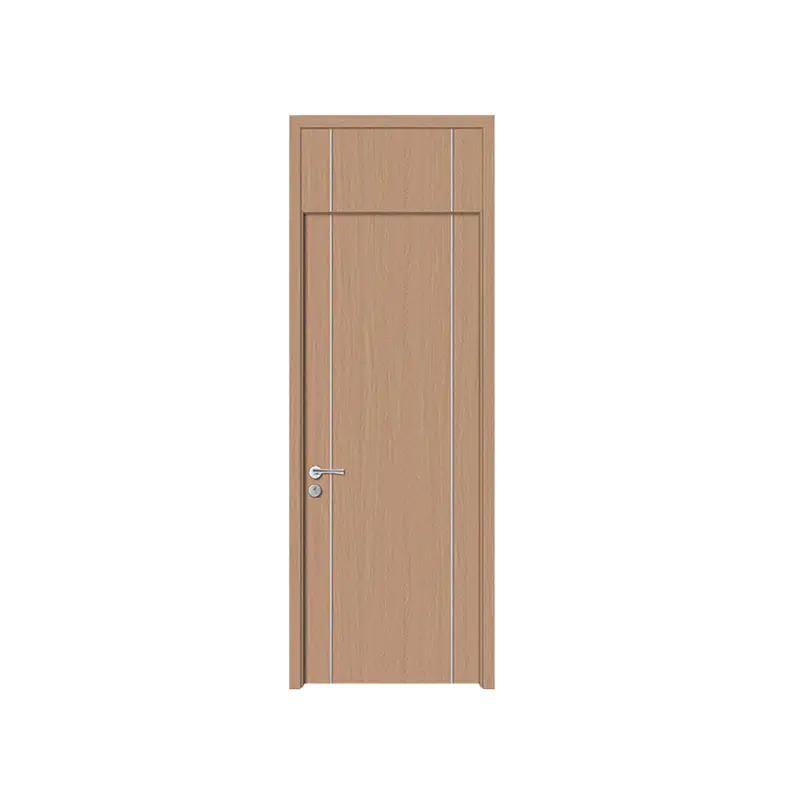
The Construction Behind the Category
MDF stands for medium-density fiberboard — an engineered wood panel made by compressing wood fibers with resin under heat and pressure. The result is a dense, dimensionally stable board without the grain variations, knots, or moisture sensitivity of solid timber. A PVC coating — polyvinyl chloride film — is applied to the MDF core surface, providing a protective outer layer that resists moisture, surface damage, and the need for periodic repainting or refinishing.
The combination works because the two materials address each other's limitations. MDF is structurally stable but vulnerable to direct water exposure at its edges. PVC is waterproof and durable on the surface but needs a rigid substrate to give it dimensional stability. Together, they produce a door that holds its shape, resists moisture at the surface, and requires minimal maintenance over its service life.
This is not a budget shortcut dressed up as engineering. It is a genuinely different product category with distinct performance characteristics.
How Does Solid Wood Actually Perform in Practice?
The Gap Between Aesthetic Appeal and Functional Reality
Solid wood doors have genuine advantages. The visual depth of real grain, the weight that communicates quality when a door swings, and the ability to be sanded and refinished after years of use — these are real properties, not marketing. In dry climates, low-humidity interiors, and applications where the aesthetic value is worth the maintenance commitment, solid wood performs as expected.
The challenge appears when environmental conditions fall outside those parameters. Solid wood is hygroscopic — it absorbs and releases moisture in response to humidity changes. In humid climates, this means expansion. In dry heated interiors during winter, it means contraction. Over years of seasonal cycling, this movement warps panels, loosens joints, and causes doors to stick or develop gaps at the frame.
Maintenance compounds the challenge. Solid wood doors require periodic finishing — repainting or re-oiling — to maintain their protective surface layer. In high-use commercial settings, a bathroom, or a rental property, this maintenance burden adds up over time in both cost and coordination.
Moisture Resistance: Where the Performance Gap Is Clearest
Why Humidity Is the Deciding Factor for Many Buyers
In residential settings, the rooms where door-related problems often occur are also those with notable moisture exposure: bathrooms, laundry areas, kitchens, and basements. These are the spaces where solid wood warps, swells, and deteriorates faster — and where the maintenance cycle starts earlier and repeats more frequently.
An MDF PVC door in the same environment behaves differently. The PVC surface does not absorb moisture. The MDF core, while not impervious at exposed edges, is considerably less reactive than solid timber to ambient humidity changes. The door holds its shape through seasonal cycles. It does not stick after humid summers or develop gaps after dry winters.
For projects in tropical climates, coastal locations, or regions with pronounced seasonal humidity variation, this performance difference is not a minor preference — it is a practical requirement that affects how long the installation holds up without intervention.
Cost Across the Full Project Lifecycle
Purchase Price Is Only Part of the Equation
The upfront cost difference between MDF PVC Doors and solid wood doors is visible at the point of purchase. Solid wood commands a higher price, and for high-quality hardwood species, the gap is substantial. This price difference is real, and for budget-constrained projects or large-scale developments where door quantities run into the dozens or hundreds, it affects the overall project economics significantly.
What is less often calculated is the lifecycle cost — the combined expense of purchase, installation, maintenance, and eventual replacement over the building's useful life. Solid wood doors in high-humidity environments require periodic refinishing to maintain surface protection. Doors that warp or stick require adjustment or replacement. In rental properties or commercial settings where tenant or guest experience depends on functioning doors, the maintenance cost of solid wood over a decade can approach or exceed the initial price differential.
MDF PVC Doors, by contrast, require cleaning rather than refinishing. Surface maintenance is periodic wiping rather than sanding, priming, and repainting. In projects where long-term maintenance cost is a real consideration — apartment developments, hotels, aged care facilities, and commercial offices — this lifecycle calculation often shifts the decision.
Comparing the Two Materials Across Key Decision Factors
A side-by-side view across the variables that matter in real purchasing decisions:
| Decision Factor | MDF PVC Door | Solid Wood Door |
|---|---|---|
| Purchase cost | Lower | Higher |
| Moisture resistance | Strong | Moderate (treatment-dependent) |
| Dimensional stability | High | Variable (climate-sensitive) |
| Surface maintenance | Low (cleaning only) | Moderate to high (periodic refinishing) |
| Aesthetic authenticity | Good — modern and uniform | Excellent — natural grain variation |
| Weight | Lighter | Heavier |
| Customization options | Wide range of finishes and profiles | Wide range — can be custom-crafted |
| Fire-rated versions available | Yes | Yes |
| Suitable for humid environments | Strong | Limited without ongoing maintenance |
| Long-term lifecycle cost | Lower | Higher in humid or high-use settings |
Neither column is uniformly stronger. The pattern is consistent: solid wood performs well in controlled, dry environments with committed maintenance. MDF PVC performs reliably across a broader range of conditions with lower ongoing demands.
Is MDF PVC a Good Fit for Commercial Projects?
Scale, Consistency, and Maintenance Drive the Answer
In large-scale commercial projects — apartment blocks, hotels, office fitouts, student housing — door specifications involve dozens to hundreds of units. At that scale, several factors that barely register in a single-family home become significant.
Consistency across units: MDF manufacturing produces consistent dimensions and surface finish across every door from a given production run. Solid wood varies — in grain pattern, color tone, and sometimes dimension — which requires sorting and matching at installation to achieve visual uniformity across a project.
Maintenance at scale: A hotel with many guest rooms cannot maintain a refinishing schedule for solid wood doors on any practical basis. MDF PVC surfaces, requiring only cleaning, suit this operational reality.
Fire-rated options: MDF Fire Door variants are available with tested fire resistance ratings, meeting building code requirements for corridor and stairwell applications in commercial buildings. These are engineered products with documented performance, not improvised solutions.
Wholesale MDF Door supply: For developers and contractors buying doors in volume, MDF PVC products are available through wholesale channels with predictable turnaround times and standardized specifications. Wholesale MDF Door supply chains are already in place for commercial procurement quantities.
Where Does Solid Wood Still Make Sense?
Recognizing the Contexts Where the Premium Is Justified
The case for MDF PVC does not eliminate the legitimate applications for solid wood. Understanding where each material fits prevents the error of applying a single specification across all contexts.
Solid wood remains a strong choice when:
- High-end residential projects where natural material authenticity is a core design value and the owner is committed to long-term maintenance
- Heritage or period renovation contexts where architectural continuity with original timber work is a project requirement
- Luxury hospitality and premium commercial interiors where the visual and tactile quality of real wood is part of the guest or client experience being delivered
- Low-humidity, climate-controlled environments where wood movement is minimal and the material performs at its natural capability
- Front door and entrance applications in dry climates where curb appeal and premium appearance are priorities — an MDF Front Door serves well in many applications, but a solid hardwood entry door carries specific visual weight in luxury residential contexts
The choice is not categorical. Projects often use different specifications in different zones — MDF PVC for wet rooms and high-use corridors, solid wood for principal living spaces or feature doorways.
MDF External Doors: What Changes at the Building Envelope?
Exterior Applications Have Specific Requirements
The comparison between MDF PVC and solid wood shifts when the door is at the building envelope — exposed to direct weather, temperature changes, and UV radiation rather than interior conditions.
MDF External Doors require specific engineering for exterior use. Standard MDF is not suited to direct weather exposure without appropriate edge sealing and a PVC or other protective surface layer rated for exterior conditions. Products specifically designed and tested for external applications exist, but the specification requirements are higher than for interior use.
Solid wood has a longer track record in exterior applications and handles direct weather exposure better than interior-grade MDF, provided the surface finish is maintained. However, it shares the same maintenance liability as interior applications — perhaps more so, given the more aggressive environmental exposure.
For MDF External Doors to perform well, the product specification needs to confirm exterior suitability, edge treatment, and surface coating durability under UV and moisture exposure. This is a case where the product data sheet matters more than the material category label.
Making the Decision: A Practical Framework
Matching Material to Project Context
A structured approach to the decision helps avoid choices driven by category preference rather than project reality.
Questions that clarify the right specification:
- What is the humidity profile of the installation environment — consistently dry, moderately humid, or high moisture?
- What is the maintenance commitment of the building owner — active maintenance acceptable, or low-intervention required?
- What is the project scale — single residential door or dozens of units requiring consistent supply?
- Does the design brief require natural material authenticity, or does a quality engineered finish satisfy the aesthetic requirement?
- Are fire-resistance ratings required for any door positions?
- Is the door interior or exterior — and if exterior, what is the weather exposure level?
Working through these questions typically produces a clear answer, and often produces a mixed specification — solid wood in specific locations where its properties are genuinely needed, MDF PVC elsewhere where its practical advantages serve the project better.
Sourcing MDF PVC Doors for Your Project
Material selection is only half of the specification process. The other half is finding a supplier whose product quality, range, and production consistency actually delivers the performance that the material category promises. Zhejiang Kings Home Decor Co., Ltd. manufactures MDF PVC Doors for residential, commercial, and hospitality applications, with a product range covering interior and exterior profiles, fire-rated variants, and wholesale supply for large-scale procurement. Their production process focuses on surface consistency, dimensional accuracy, and the edge-sealing and coating quality that determines how the door performs over its service life rather than just at point of delivery. If you are specifying doors for a development project, evaluating wholesale supply options, or sourcing MDF PVC Doors for distribution, reaching out to discuss product specifications and project requirements is a practical starting point for matching the right product to the actual demands of your installation context.
Interested in cooperation or have questions?


 +86-13857003056
 No. 27 Lianhuashan Avenue, Jiangshan Economic Development, Jiangshan, Quzhou, Zhejiang, China
Copyright © Zhejiang Kings Home Decor Co., Ltd. All Rights Reserved.

Interior Wood Door Manufacturer