Budget planning for interior doors is one of the decisions that catches project managers off guard more often than it should. The price difference across door categories tends to be larger than many people assume. A mid-range door with a good finish and a premium alternative may look quite similar at a glance, yet their price points tell a different story. Whether the project involves a residential development, a hotel interior fit-out, or a commercial building renovation, the deciding factor is seldom which door type appears more impressive. Instead, the real consideration lies elsewhere. It is which combination of material, finish, and price point makes the project viable without compromising on the quality expectations at each level. MDF PVC Doors occupy a significant and growing share of that calculation, particularly across the mid-range and entry-level tiers.
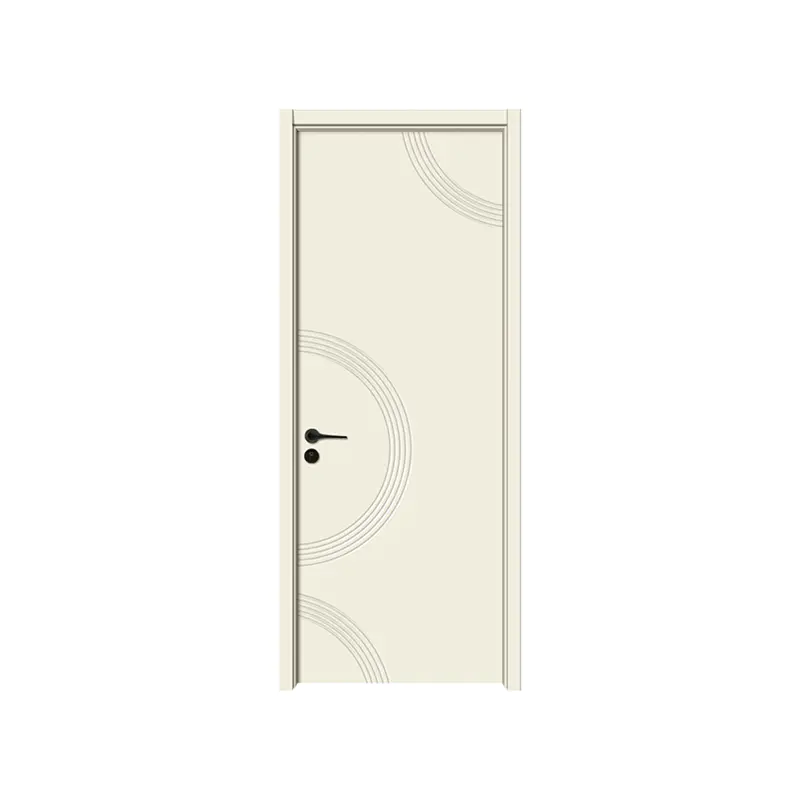
What Drives Interior Door Costs?
Material Is the Foundation, But Not the Whole Story
The base material — whether MDF, solid timber, hollow core, or engineered composite — sets the cost floor for any door type. MDF is manufactured from compressed wood fibers and resin, which makes it dimensionally stable, smooth, and well-suited to a variety of surface treatments. Solid core and solid timber doors require more raw material and more complex processing, which is reflected directly in unit price.
Surface finishing adds a second layer to the cost equation. A door blank finished with a PVC laminate film is processed differently — and usually more cost-efficiently — than one that requires multiple coats of paint, hand-sanding, and a clear topcoat. The finishing process also affects durability, moisture resistance, and how well the door holds up over years of use.
Beyond material and surface, production complexity matters. Doors with routed panel profiles, glass insets, or complex frame joinery require more tooling time and more careful quality control at each production step. A flat-panel door in a standard size is faster to produce consistently at scale than an arch-top door with decorative moulding.
Lifecycle Cost Deserves More Attention Than It Usually Gets
Purchase price is the number that appears on a specification sheet, but lifecycle cost is what a project actually spends on doors over time. A lower-cost door that requires repainting after two years, or that swells in a humid environment and requires adjustment or replacement, produces a different total cost from a more durable option with a higher initial price.
For procurement teams managing large-scale projects, the door type that delivers reliable performance across the installation's full service life — without recurring intervention — often justifies a moderate cost premium that the purchase price comparison alone would not suggest.
Interior Door Types Mapped to Budget Levels
LOW
Lower Budget Projects: Entry-Level PVC Laminate Options
At the lower end of the budget range, the practical choices converge on PVC-laminated MDF panels. These doors use an MDF substrate with a PVC film applied under heat and pressure, producing a smooth, wipeable surface that does not require painting and resists light moisture exposure.
For affordable housing developments, rental properties, student accommodation, and budget commercial fit-outs, this combination delivers:
- Consistent surface quality across large quantities without variability from hand-finishing
- Resistance to everyday wear — scratching, impact, and moisture — at a level appropriate for high-traffic corridors
- A neutral aesthetic that suits standard interiors without requiring design-specific customization
- Efficient production and wholesale supply at volumes that support tight project margins
Wholesale MDF Door supply in this category is established and scalable, enabling procurement teams to source consistent product across large orders without exposure to extended delivery risk.
MID
Mid-Range Budget Projects: MDF PVC Doors With Design Flexibility
The mid-range tier is where MDF PVC Doors genuinely earn their market position. These products retain the cost efficiencies of MDF construction while offering more sophisticated surface options — woodgrain PVC films that read as timber, deeper panel profiles, and a wider range of color and texture choices — that suit apartment developments, hotel rooms, commercial offices, and residential renovation projects where appearance expectations are higher.
What distinguishes mid-range doors from entry-level options in this category:
- PVC films with more realistic timber grain depth and sheen variation
- Panel routing that creates shadow lines and dimensional interest
- Tighter dimensional tolerances that produce a cleaner installation fit
- Better core density that improves acoustic performance and door feel
- Surface finishes that hold up to cleaning products without dulling
Custom MDF Doors in this tier allow project architects and procurement teams to specify particular panel configurations, hardware prep locations, and surface treatments that the standard wholesale range may not include. That customization flexibility is particularly relevant for hotel projects and branded commercial developments where door design is part of a wider interior concept.
HIGH
Higher Budget Projects: Painted and Solid Core Doors
Moving up from MDF-based construction, painted wood doors and solid core doors address projects where material authenticity, acoustic performance, and premium finish quality are central to the brief. These doors are typically specified for luxury residential developments, premium hotel categories, high-end commercial interiors, and heritage renovation projects where a flush timber door or a solid panel door carries design significance beyond its functional role.
The cost premium reflects several things simultaneously:
- Greater raw material cost in solid core and solid timber construction
- More intensive finishing processes — priming, undercoating, colour coats, and sometimes hand-finishing stages
- Higher hardware compatibility requirements for heavier door weights
- Lower production volume relative to MDF lines, which reduces economies of scale
For a project where budget allocation supports this tier, the investment delivers a product that reads and feels different — in door weight, in sound transmission, and in the way painted finishes age compared to PVC laminates. Procurement decisions at this level are less about cost comparison and more about project specification and long-term brand alignment.
Cost and Performance Overview Across Door Categories
Understanding how door categories compare across the factors that matter in project procurement clarifies where the genuine tradeoffs lie.
| Door Type |
Budget Level |
Moisture Resistance |
Acoustic Performance |
Design Flexibility |
Typical Application |
| Basic PVC MDF panel |
Lower |
Moderate |
Standard |
Limited |
Budget housing, student accommodation |
| MDF PVC Doors |
Mid-range |
Good |
Moderate to good |
High with custom options |
Apartments, hotels, commercial |
| Painted MDF door |
Mid to higher |
Moderate |
Good |
High |
Offices, mid-range residential |
| Solid core door |
Higher |
Varies by finish |
Strong |
Moderate |
Luxury residential, commercial |
| Solid timber door |
Premium |
Low without treatment |
Strong |
High |
Heritage, luxury, bespoke projects |
This comparison works as a starting reference, not a rigid classification. Door performance varies within each category depending on core density, surface treatment, and hardware selection. A well-specified MDF PVC door, in projects with a mid-range budget and acoustic or moisture requirements, may outperform a basic solid core option across the dimensions that matter for that application.
Application Scenarios and Door Type Matching
Residential Apartments
Multi-unit residential development is one of the clearest use cases for MDF PVC Doors. Unit counts are high, the aesthetic requirement is consistent across units, budget allocation per door is defined and limited, and the doors need to handle daily use across the full occupancy cycle without requiring maintenance between tenancies.
PVC laminate surfaces in woodgrain or solid colour finishes meet these requirements well. They clean easily, resist light impact, and maintain their appearance over the unit's standard tenancy period without repainting. For developers managing dozens or hundreds of units simultaneously, the consistency of supply and the reliability of finish quality across the full order are as important as unit price.
Hotels and Commercial Interiors
Hotel corridor and guest room doors operate under conditions that residential doors rarely face — heavy daily traffic, repeated contact from luggage and trolleys, and the need for a consistently maintained appearance across the full property. MDF PVC Doors in hotel specification typically incorporate higher-density cores, more robust edge banding, and PVC films selected for wear resistance rather than just visual appeal.
Custom MDF Doors are particularly relevant in hotel contexts because standard catalog products may not match the property's design concept, fire classification requirements, or hardware configuration. Working with a manufacturer capable of developing custom panel profiles, specifying particular film textures, and pre-drilling for specific lock and hinge sets reduces installation complexity and ensures design coherence across the property.
Bathroom and Wet Area Applications
Moisture is a variable that alters door specification substantially in residential and hospitality projects. Standard MDF absorbs moisture when cut edges are exposed or surface damage occurs, resulting in swelling, delamination, and eventual structural failure. MDF doors for bathroom applications address this through moisture-resistant core formulations, sealed edge banding that prevents water ingress at vulnerable points, and PVC surface films that do not absorb or transmit moisture.
For bathroom doors in standard residential and mid-range hospitality applications, properly specified MDF doors for bathroom use perform reliably when installed correctly. The key specification points are moisture-resistant core, fully sealed edges, and a gap at the bottom of the door that prevents standing water contact.
Fire-Rated Zones
Commercial buildings, multi-occupancy residential developments, and hospitality properties all contain areas where fire-rated doors are a code requirement rather than a design choice. An MDF fire door incorporates intumescent materials within the core that expand when exposed to heat, sealing the gap between door and frame to slow fire progression. The door assembly — frame, hinges, intumescent seals, and door blank — must be tested and certified as a system, not as individual components.
For procurement teams sourcing MDF fire doors, the certification documentation is as important as the physical product. Fire door certification needs to specify the rating period, the test standard, and the conditions under which the certification applies. Substituting components or modifying a certified assembly invalidates the certification and the protection it provides.
MDF Door Versus Solid Core: Where the Decision Actually Falls
The MDF door versus solid core comparison comes up frequently in mid-to-upper budget project discussions, and it is worth being clear about what is actually being compared. A solid core door uses a core of particleboard, engineered composite, or in some cases solid timber — denser and heavier than a standard MDF construction. The surface may still be MDF or engineered wood, with a painted or laminated finish.
Practical differences that matter for many projects:
- Weight and door feel: Solid core doors are noticeably heavier, which affects the feel of closing and requires heavier-duty hinges. Some buyers interpret this weight as quality; others find it inconvenient in high-traffic spaces.
- Acoustic performance: Greater mass generally means better sound attenuation. Solid core doors reduce sound transmission more effectively than standard MDF constructions of equivalent thickness.
- Cost: Solid core construction costs more in materials and production. For projects where acoustic performance is not a priority, the additional cost does not produce proportional benefit.
- Moisture behavior: Neither MDF nor solid core is inherently moisture-proof. Both require appropriate surface treatment and edge sealing for wet area applications.
When Solid Core Is Genuinely Justified
In residential apartment and mid-range hotel projects, a well-specified MDF PVC door provides the required performance at a price point that the project budget supports. Solid core is justified when acoustic separation between spaces is a specific design or code requirement.
How Material Quality Affects Budget Efficiency
Not All MDF Performs the Same Way
MDF is a broad category, and the performance difference between a lower-density commodity board and a higher-density, moisture-resistant formulation is significant in door applications. Buyers who compare MDF PVC Doors on price alone without specifying core density, edge banding quality, or film grade will find inconsistent performance across orders.
For wholesale procurement, establishing clear material specifications — not just product descriptions — produces more consistent results across batches. A reliable supplier will be able to document core density, film thickness, and edge banding specifications rather than only providing visual samples.
Surface Film Quality Has a Real Shelf Life Difference
PVC film quality ranges considerably, and the difference shows up over time rather than at installation. Lower-grade films may begin to lift at edges, develop surface cracking, or fade unevenly within a few years of installation. Higher-grade films maintain their appearance and adhesion through years of cleaning and daily contact.
For projects where the interior will not be substantially renovated for an extended period, film quality is a meaningful specification point. For short-cycle projects where renovation is expected within a few years, lower-grade films may be an acceptable cost reduction.
Sourcing Strategy for Different Budget Levels
Door specification is only part of the procurement decision. Supplier capability — to produce at the required volume, to maintain specification consistency across batches, to handle custom requirements, and to support export documentation for international projects — determines whether the product on paper becomes the product delivered on site.
Key Questions for Supplier Evaluation Across Budget Levels
- Can the supplier produce to a specified core density and film grade rather than only from a standard catalog?
- What quality inspection processes apply at production and before dispatch?
- Can they support custom panel profiles, pre-drilling configurations, or non-standard sizes for project-specific requirements?
- What delivery timeframes apply for Wholesale MDF Door orders at the required volume, and how are they influenced by peak production periods?
- Do they hold relevant certifications for fire doors or moisture-resistant products where these are required?
For projects requiring Custom MDF Doors — whether for design reasons, fire rating requirements, or specific hardware compatibility — working with a manufacturer early in the specification process produces better outcomes than treating the door as a late-stage procurement item.
Why China-Based Sourcing Is Relevant for International Projects
China-based MDF PVC door manufacturing has developed significant capacity across the budget and mid-range tiers that drive volume in international construction and hospitality projects. The combination of MDF material supply, PVC film processing capability, and export logistics infrastructure makes it possible to source large volumes of consistent, specified product at price points that support project viability.
For international buyers, the relevant evaluation points are production consistency across batches, supplier responsiveness to specification requirements, and familiarity with export documentation — not simply unit price. Wholesale MDF Door programs from established manufacturers can support initial trial orders alongside the larger replenishment volumes that ongoing project supply requires.
Questions Buyers Commonly Ask
Q1
Which interior door works well for lower-budget residential projects?
PVC-laminated MDF doors in standard sizes and flat or simple panel configurations are the practical choice for lower-budget residential projects. They offer consistent finish quality, adequate durability for residential use, and a supply structure that supports large volumes at predictable pricing.
Q2
Are MDF PVC Doors durable enough for apartments?
For standard residential apartment applications — bedroom, bathroom, and corridor doors — MDF PVC Doors with properly sealed edges and appropriate core density are durable and fit for purpose. Durability concerns arise primarily when edge sealing is inadequate or when the specification is inappropriate for the humidity or use intensity of the specific location.
Q3
What is the practical difference between MDF and solid core doors?
The differences that matter for many projects are weight, acoustic performance, and cost. Solid core is heavier, attenuates sound more effectively, and costs more. For spaces where sound separation between rooms is a specific requirement, solid core justifies the premium. For standard residential and light commercial applications, the performance difference often does not justify the cost difference.
Q4
Are MDF fire doors significantly more expensive than standard MDF doors?
Fire-rated MDF doors carry a cost premium that reflects the additional materials in the core, the certified assembly components, and the testing and certification costs embedded in the product. The premium is meaningful but not disproportionate relative to the fire rating's value in code-compliant commercial and multi-occupancy residential projects.
Q5
Can MDF doors be specified for bathroom applications?
Yes, with the right core formulation and edge treatment. Moisture-resistant MDF core, fully sealed edge banding, and a PVC surface film provide adequate moisture resistance for bathroom door applications in standard residential and hospitality settings. The installation gap at the door base should allow for airflow rather than creating standing water contact with the door bottom.
Q6
How do I find a reliable supplier for Wholesale MDF Door orders?
Evaluate suppliers on their ability to document material specifications, produce consistently across batches, accommodate custom requirements, and provide relevant certifications for specialized products. A supplier who engages seriously with specification questions is more likely to deliver a consistent product than one who communicates only in terms of catalog descriptions and price lists.
Interior door selection is ultimately a resource allocation problem — matching the performance characteristics of a door category to the budget available for a given application, without over-specifying where a lower-cost option is genuinely adequate or under-specifying where durability or safety requirements make a higher-cost option necessary. MDF PVC Doors occupy a central position across the mid-range tier precisely because they deliver a combination of surface quality, dimensional stability, customization potential, and wholesale supply efficiency that no other door category matches at comparable price points. For procurement teams working across multiple project types and budget levels simultaneously, building a clear framework for matching door type to project tier — and working with a supplier capable of delivering across that full range — reduces specification errors and procurement delays throughout the project cycle.
About the Manufacturer
Zhejiang Kings Home Decor Co., Ltd. manufactures interior doors across the full range from standard PVC laminate to custom MDF configurations, with production capability supporting wholesale volumes, project-specific customization, and fire-rated product lines for commercial applications. For specification support, sample requests, or sourcing discussions, reaching out to their team directly is the practical next step for any project that requires reliable door supply across multiple budget tiers.


 English
 русский
 Français
 Español
 عربى
عربى

 +86-13857003056
 No. 27 Lianhuashan Avenue, Jiangshan Economic Development, Jiangshan, Quzhou, Zhejiang, China